T021 // Space Race 2.0 – Here We Go Again!
Plus Low Earth Orbit satellite market projections, the latest investments in the Space Economy, the countries dominating space, and Picasso-inspired space paintings
 FIG. 01 · T021 COVERREC ●TRANSMISSION T021
#LAUNCHPADIn today’s edition
G’day Trailblazers!
We’re Trailblazers, the Space Newsletter that keeps you updated on the New Space Race between the U.S. and China, where it's not just about who has the biggest rocket, but who can play the best Tri-Dimensional cosmic chess.
- #BEYONDTHEHYPESpace Race 2.0 – Here We Go Again!
- #STARGRAPHWhich Countries are Dominating Space?
- #PRODUCTIVITY5 Resources to Boost Your Workflows
- #DEALFLOWThe Latest Investments in the Space Economy
- #OUTOFTHISWORLD'Oumuamua and the Possibility of an Interstellar Artificial Visitor
- #GHOSTINTHEMACHINEPablo Picasso Inspired Space Paintings
#TOGETHERWITHTake your space career from if, to when, to how
 SPONSOR TRANSMISSION · COURSERA
Sponsored · COURSERA
Whether you're looking to start a new career in the space industry or advance in your current field, Coursera Plus offers a wide range of programs in space and high-growth fields such as cybersecurity, data analytics, AI and more.
Archived sponsor message from 16 MAY 2024.
#NEWSSpace Economy Bites & Snaps
LEO Satellites
The Low Earth Orbit satellite market is projected to expand from $12.6 billion in 2024 to $23.2 billion by 2029, fueled by advancements in satellite miniaturization and internet services.
Space Settlement
Responsible space colonization offers a unique opportunity for humanity, focusing on sustainable expansion without displacing indigenous populations, as Earth's history has shown.
- SNAP · 01Space Tracking: Booz Allen Hamilton report finds urgent need for space tracking tech despite limited commercial prospects.
- SNAP · 02Space Sustainability: NASA Strategy outlines commitment to space sustainability, impacting future missions and policies.
- SNAP · 03Space Economics: Analysis shows space refueling math flawed, questioning its viability and costs.
- SNAP · 04Space Weather: Solar storms disrupt farmer navigation, highlighting vulnerability of agriculture tech.
- SNAP · 05Space Debris: Canadian farmer sells rocket junk for local hockey rink, sparking safety debates.
- SNAP · 06Space Connectivity: AT&T partners with AST SpaceMobile for satellite cellular network, boosting remote access.
#REALLY?What Is the “New Space Race”?
The contemporary space race between the US and China, often referred to as the "new space race," has been intensifying over recent years, particularly with China's rapid advancements in space technology and its ambitious lunar and Mars missions. The competition has notably heated up in the 21st century as China has made significant strides in its space program.
In this race, China achieved a significant milestone by landing the Chang'e-4 mission on the far side of the Moon in January 2019, a feat that no other country has accomplished. This mission not only demonstrated China's growing capabilities in space exploration but also symbolized its rising status as a major space power, challenging the traditional dominance of the United States, Russia, and Europe in space exploration.
#MARKETWATCHInvesting in the Universe
| FUND | PRICE | CHANGE |
|---|---|---|
| Procure Space ETF (UFO) | $16.06 | ▲ +2.9% |
| RK Space Exploration and Innovation (ARKX) | $15.59 | ▲ +2.0% |
| S&P Kensho Final Frontiers (ROKT) | $45.62 | ▲ +1.3% |
#BEYONDTHEHYPEThoughts and Opinions
Space Race 2.0 – Here We Go Again!
For two years, the audience has been nurtured regularly by the mild progress and constant delays in the plan to return to the Moon. But why on Earth did they stop the Moon conquest after the first success 56 years ago? Why did we let the door open to the new, serious, usual suspect and adversary? The answer lies in a dozen logical and illogical reasons.
First, it's typical of Americans: job done, won the competition, losing the attention and interest of the public always waiting for what's next. It's also typical of Europeans, who did not take the chance to relay with a totally reverse, conservative view. Why spend billions of euros on space when there is so much to do first on Earth? Fair enough, but they forgot that high-tech developments in space result in progress for the citizens. A very simple example is GPS. Who is capable of reading old-school maps today? Guess what? We had to wait over 50 years to see a nascent "Space Tech" ecosystem with a vibrant VC eager to finance this new generation.
All these attitudes were rather simplistic but enough to shut down any astronaut landings and lunar station build-up. Objectively, they moved the funds to operate scientific research on the ISS orbital station and ambitious probe projects in outer space, with impressive results coming from JWST. But on the Moon side, nothing really new and spectacular other than mapping our next-door neighbor in detail. Did it look too simple and not prestigious enough? Personally, I still wonder.
So now, why are we suddenly back to the Moon? The pragmatic reason is that scientists solidly confirm that ice in the Moon's south pole craters, in large quantities, could not only be transformed into simple water for lunar stations but, more seriously, into hydrogen for spacecraft propulsion. This implies that the Moon could be a general spaceport for "touch and go" to outer space missions.
The second reason is the reasonable certainty of finding Helium-3 in massive quantities that we need back on Earth, this time for nuclear fusion research, among other crucial applications. So, the Moon is going to be a mining spot and not so much a space tourism trip for billionaires. Fair enough!
But on the financial and technology side, we are not there yet at all! NASA, ESA, JAXA, ISRO, and the other space agencies are still reasoning with last-century proven technologies, with very methodical and extremely prudent iterations, all in the name of safety for the astronauts. But why slow down and quadruple-check any small move? Because we are still thinking about sending human astronauts and not robots or androids that will be vexing for our intellect, even if 80% cheaper. But this is another long debate we will argue later.
The only really new tech approach came up with the arrival on the scene of a South African-born: Elon. Despite the dozen defects and awkward behaviors he has, he has ONE quality: he is able to convince anyone to follow him on his wildest plans. NASA's "stiff upper lip" lost the plot of the reusable launcher, a mad idea that is now the major example of high risk and reward in space tech.
Imagine the NASA boys looking at this cartoonish "non-pure American" – with zero space record – attempting the impossible. They were caught completely off guard and ridiculed in comparison to their high-budget policy mantra, "let's launch and crash back our debris." The US government will continue to foot the bill anyway!
NASA was stubborn for a long moment, but they felt that they were going against the wind and that it was better to outsource launches to the young lad. A smart decision, just reading the latest statistics: 334 launches over 14 years (as of January 2024) and a 99.4% success rate on reusable rocket returns. Smart!
The nascent "Space Tech" sector and the newly revised public-private cooperation, which was a striking NASA strategy review, is an effective, solid reason for the new confidence to go back to the Moon. This loud message did not fall on deaf ears on the other side of the world. The Chinese space ecosystem observed, comprehended, and... copied!
The third real and serious reason for suddenly returning to the Moon has now become very clear and geopolitical: to prevent China from planting their flag there before NASA and "Artemis Accords" friends return!
The Moon has become the ultimate prize in a high-stakes geopolitical game. It's not just about science; it's about planting a flag where it counts.
It is a race about national pride on a universal scale.
#TOGETHERWITHElevate Your Space Projects to New Heights with Notion!
 SPONSOR TRANSMISSION · NOTION
Sponsored · NOTION
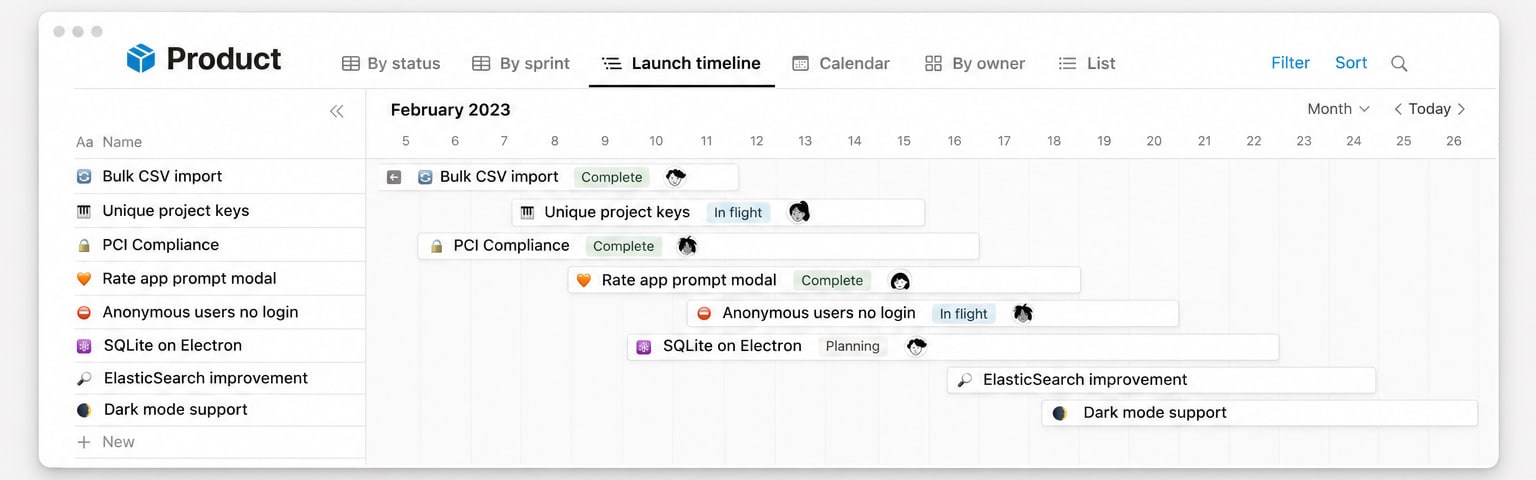
In the fast-paced space industry, efficient project management isn't just a necessity—it's a game changer. Notion offers a versatile platform that adapts to your diverse professional needs, whether you're an engineer designing the next-generation satellite, a lawyer navigating complex regulatory landscapes, or a marketer telling the story of your space venture. Notion brings all your work into one unified space, facilitating collaboration, tracking progress, and ensuring that your team stays aligned and focused on the mission ahead. Transform how you manage projects, from ideation to launch, with Notion's customizable templates and integrative features.
Archived sponsor message from 16 MAY 2024.
#STARGRAPHWhich Countries are Dominating Space?
#PRODUCTIVITY5 Resources to Boost Your Workflows
- TOOL · 01manyexcel → Generate Formulas for Excel and Google Sheets in seconds with AI.
- TOOL · 02Astropolitics 2.0PROMOTED → Frank's upcoming book (October 2024), "ASTROPOLITICS - Reality Check," explores the global interplay of geopolitics and astropolitics, focusing on the US-China rivalry, revealing the truths and insights in a future where geopolitics will be part of a larger cosmic game.
- TOOL · 03Notion AIPROMOTED → An AI platform that helps users organize and manage their tasks, projects, and notes. Try it now.
- TOOL · 04The Woomera Manual on the International Law of Military Space Operations → A comprehensive guide to military space law, outlining legal norms for peace, crisis, and conflict, integrating space law with security and diplomacy for peaceful cooperation.
- TOOL · 05Northeast Greenland filmed from space → The European Space Agency shared footage of northeast Greenland filmed from space on May 13.
#DEALFLOWThe Latest Investments in the Space Economy
- 01Infinite Orbits Secures €12 Million to Pioneer Satellite Life Extension Technology.€12 MillionRAISE
- 02ISS National Lab announces $750,000 in funding for technology development in low Earth orbit.$750,000
- 03BAE Systems awarded $12 million by DARPA to enhance radio frequency-based electronic warfare systems.$12 million
- 04Maritime Launch receives $12.9 million term sheet from Canadian government for Spaceport Nova Scotia development.$12.9 million
- 05UK Space Agency allocates £9 million for satellite technology to enhance climate monitoring.£9 million
- 06Xona Space Systems raises $19M in Series A for advanced satellite navigation services.$19MSERIES A
- 07Danti raises $5M, announces U.S. Military as new customers for AI-driven satellite data analysis.$5MRAISE
- 08World View expands into Indo-Pacific with $25M strategic investment.$25MINVESTMENT
- 09Privateer raises $56.5 million and acquires Orbital Insight to enhance satellite data services.$56.5 millionACQUISITION
- 10Lockheed Martin withdraws $500 million bid for satellite builder Terran Orbital.$500 million
- 11Astroscale receives approval for listing on Tokyo Stock Exchange Growth Market.
- 12Leonid Capital Partners expands space portfolio with $20MM term loan to ABL Space Systems.LOAN
#OUTOFTHISWORLD'Oumuamua and the Possibility of an Interstellar Artificial Visitor

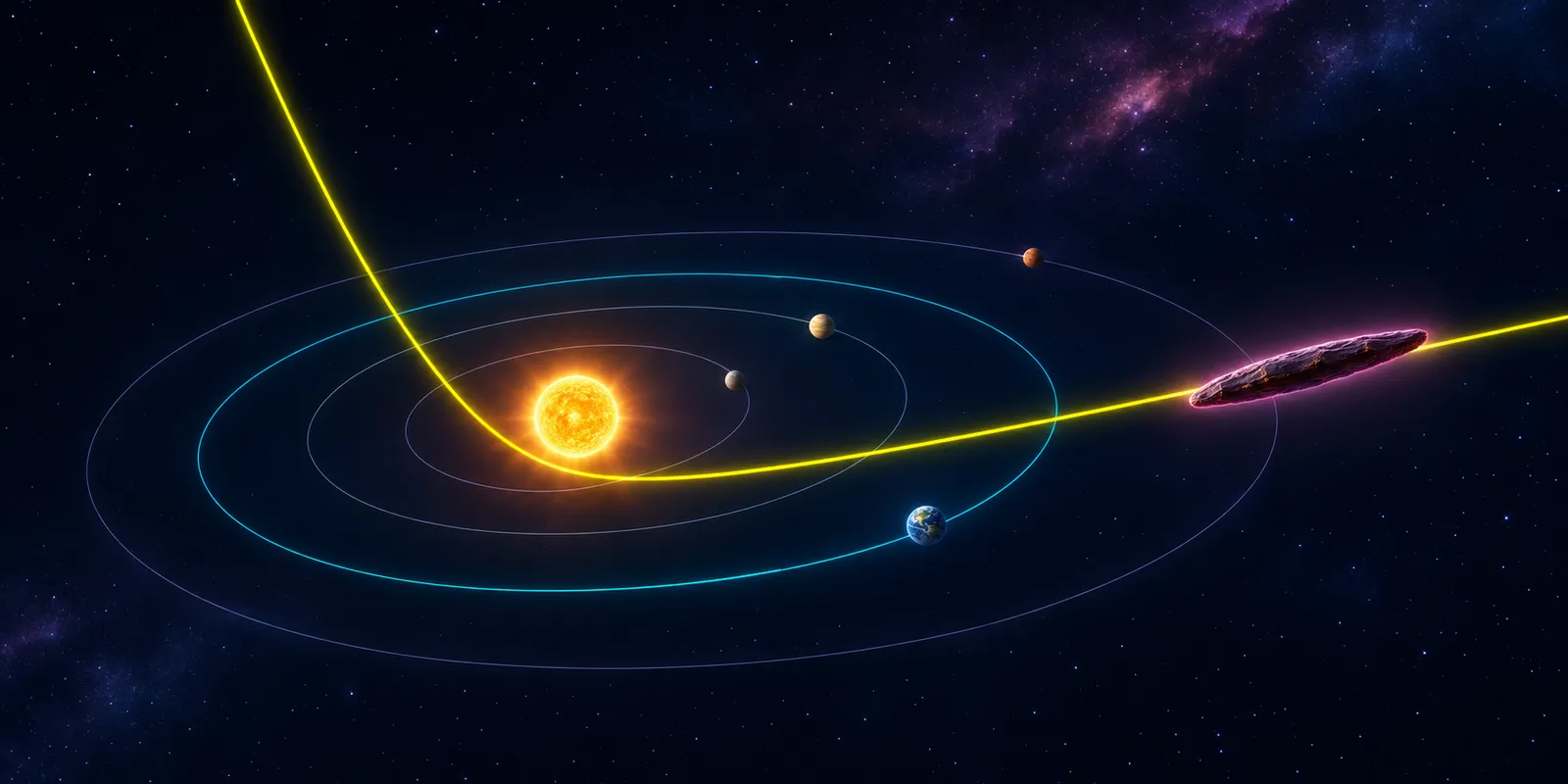
'Oumuamua is the first known interstellar object to pass through our solar system, discovered in October 2017 by the Pan-STARRS telescope in Hawaii. Its highly unusual characteristics, including its elongated shape, extreme brightness variations, and non-gravitational acceleration, have led some scientists, most notably Harvard astronomer Dr. Avi Loeb, to suggest that it could be an artificial object of extraterrestrial origin.
'Oumuamua's trajectory indicated it originated from outside our solar system, perhaps from the direction of Vega in the constellation Lyra. Its shape was estimated to be highly elongated, with a length up to 10 times its width. As it passed by the Sun, 'Oumuamua exhibited a smooth, non-gravitational acceleration that could not be fully explained by outgassing, as would be expected from a comet.
Dr. Avi Loeb, chairman of Harvard's astronomy department, has been a vocal proponent of the hypothesis that 'Oumuamua could be a light sail or artificial probe from an alien civilization. In his book "Extraterrestrial", Loeb argues that 'Oumuamua's peculiar properties are difficult to explain through natural processes alone, and that the possibility of an artificial origin should be seriously considered. However, this view remains controversial among many astronomers, who favor natural explanations such as 'Oumuamua being a hydrogen iceberg or exotic comet.
 Open path never returns'OumuamuaEarth's orbit
As the first confirmed interstellar visitor, 'Oumuamua represents a unique opportunity to study an object from beyond our solar system and learn about the conditions in other planetary systems. If it is indeed artificial, as Loeb suggests, it would have profound implications for the existence of extraterrestrial intelligence and the prevalence of technological civilizations in the galaxy.
Even if 'Oumuamua is a natural object, its discovery highlights the potential for detecting interstellar visitors in the future, especially with the advent of new observatories like the Vera C. Rubin telescope. By studying objects like 'Oumuamua, we can gain insights into the formation and evolution of planetary systems, and potentially find evidence of life or technology beyond Earth. As Loeb argues, the scientific community should be open to exploring all possibilities and devoting more resources to the search for extraterrestrial intelligence.
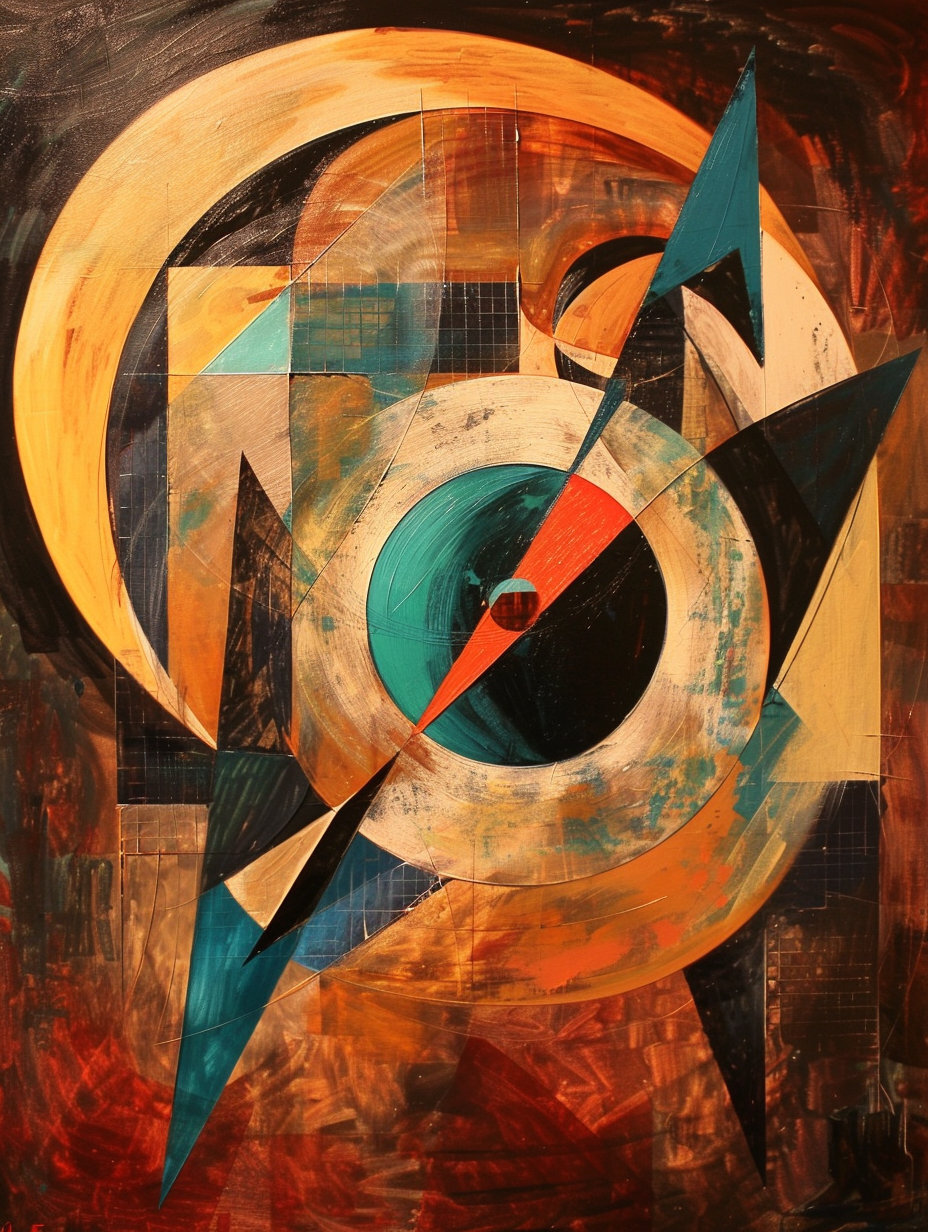
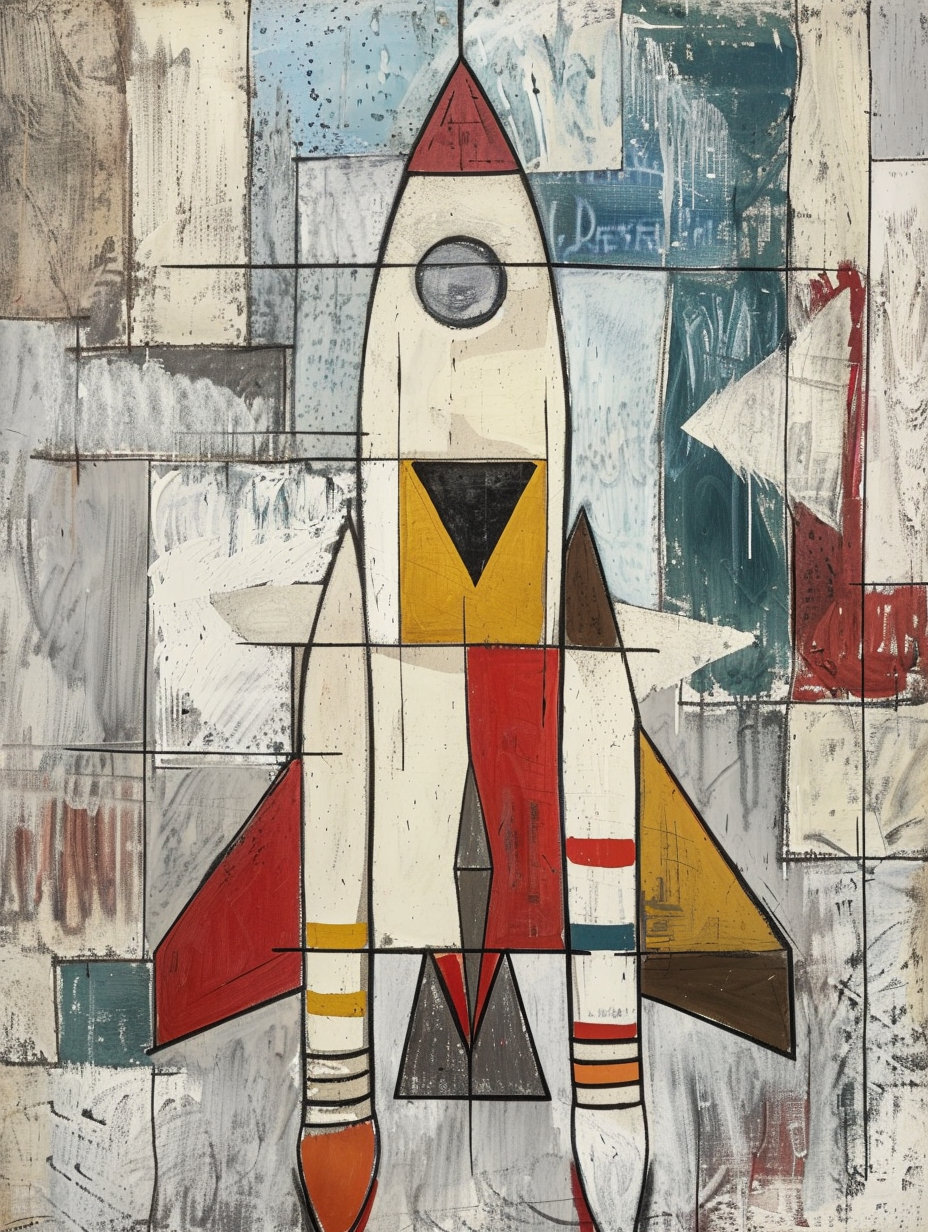
#GHOSTINTHEMACHINEPablo Picasso Inspired Space Paintings
 01
 02
 03
 04
 05
 06
EOFUntil Next Time
#MISSIONDEBRIEFGetting Better Together
I value your opinion, so if you have specific advice or anything interesting you’d like to share, please let me know on LinkedIn.
Thank you for reading and see you at the next orbit!
P.S. New here? Get the next issue in your inbox: [ subscribe --free ]