T009 // Space Debris and Armageddon
Plus Odysseus' swan song, space IoT's $7B deal, and the latest investments in the space economy
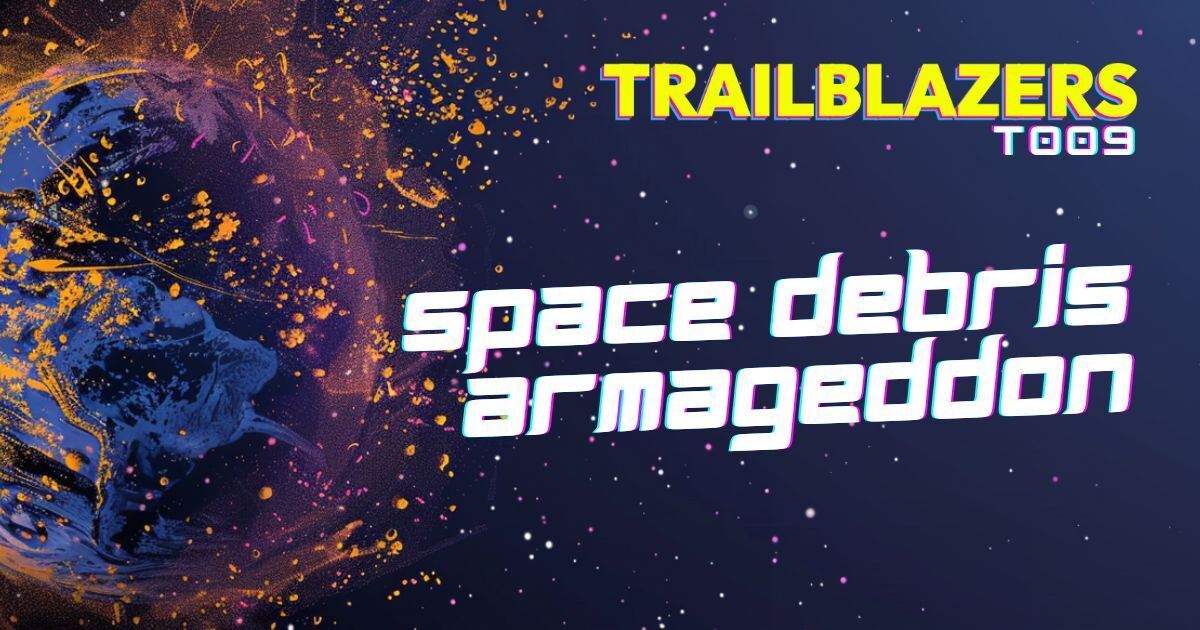 FIG. 01 · T009 COVERREC ●TRANSMISSION T009
#LAUNCHPADIn today’s edition
G’day Trailblazers!
We’re Trailblazers, the Space Newsletter that doesn't shy away from the debate on space debris—because not everyone sees eye to eye, but we all look up to the same stars.
- #BEYONDTHEHYPESpace Debris and Armageddon
- #STARGRAPHTimeline & Scale of Orbital Space Stations
- #PRODUCTIVITY5 Resources to Boost Your Workflows
- #DEALFLOWThe Latest Investments in the Space Economy
- #GHOSTINTHEMACHINEFamous Space People on the Iron Throne
#TOGETHERWITHManage Any Space Project, Your Way
 SPONSOR TRANSMISSION · monday.com
Sponsored · monday.com
Elevate your space projects with monday.com! 🚀
Archived sponsor message from 01 MAR 2024.
#NEWSSpace Economy Bites & Snaps
Swan Song
Intuitive Machines' Odysseus, the first successful private moon lander, powers down after a historic landing, with hopes to reawaken, marking a key moment in lunar exploration and private space ventures.
LEO Boost
Canadian company MDA is negotiating satellite-based broadband and IoT deals worth $7bn, showcasing a significant surge in space technology demand.
- SNAP · 01SpaceX: enhances launch stand durability with a new water protection system, aiming for daily flights.
- SNAP · 02Umbra: secures NRO's Phase II for commercial RF study, bolstering U.S. space intelligence capabilities.
- SNAP · 03AAC Space Africa: lands its first satellite order, a landmark deal advancing Africa's space industry presence.
- SNAP · 04Alba Orbital: wins contract for launching ultra-compact satellites, expanding global IoT connectivity affordably.
- SNAP · 05Space Travel: Engineers tackle motion sickness in astronauts with innovative experiments and virtual reality solutions.
#REALLY?Who Owns the Moon?
The Moon is not owned by any country, individual, or entity.
The Outer Space Treaty, ratified by over 130 countries, designates outer space, including the Moon, as the province of all humankind and forbids any claims of sovereignty. This treaty ensures that space exploration is conducted for the benefit of all nations and maintains that outer space is to be used exclusively for peaceful purposes.
#MARKETWATCHInvesting in the Universe
| FUND | PRICE | CHANGE |
|---|---|---|
| Procure Space ETF (UFO) | $16.85 | ▲ +0.1% |
| RK Space Exploration and Innovation (ARKX) | $14.47 | ▲ +0.3% |
| S&P Kensho Final Frontiers (ROKT) | $43.96 | ▲ +0.3% |
#BEYONDTHEHYPEThoughts and Opinions
Space Debris and Armageddon
If you have an interest in these subjects, please bear with me. Feel free to challenge numbers, ideas, and assumptions (though I try not to assume anything about space operations) on LinkedIn.
Virtually everyone in every sector of the space community has witnessed the blood-in-the-water shark frenzy developing around the imminent ‘Armageddon’ of orbital debris. Leaving aside the infinitesimally small number of verified damage incidents attributable to debris strikes—with little, if any, information on what caused the strike (artificial debris, meteorites, monatomic oxygen, intense radiation bursts, natural or artificial weapons)—I thought it might be interesting to neutrally examine some numbers and scenarios. I served on the original MIT Lincoln Labs Haystack Observatory Satellite Collison Avoidance Working Group. The working group’s research and findings were initially classified as SECRET, as was the observatory itself.
Several members investigated generic debris issues; however, the principal function of the working group was to track and identify intentional encroachments, such as ‘bumping’ and deliberate collisions, ‘attacks’ on US GEO satellites. We found many of them. The Haystack radars could ‘skin paint’ at 24,000 miles. At the time, there were less than 300 GSO satellites—now there are about double that number. The ITU spacing requirements were set at 1.5 degrees but in practice, some satellites operated within 50 miles of each other, granted at the much slower GSO velocities of 2 to 4 kilometers per second. Okay, let’s assign a BLENDED ‘parking space’ size of 5 cubic miles per satellite, averaging spacing in SLEO/LEO/MEO/GEO and 1 cubic mile each for every one of the 30,000 pieces of debris.
Call this 10,000 functional satellites; that would be 50,000 cubic miles for satellites and 30,000 cubic miles for debris. 80,000, call it 100,000 cubic miles for every single object, all operating in defined, predictable trajectories. That leaves 259,990,000,000 cubic miles of free, empty space. That ratio is 10-100 times greater than the space between the nucleus and electron shell of an atom. So, using that very generous number, we could put up 100,000,000 or more satellites without risking a single collision with each other or debris.
The spacing of GEO satellites is approximately 1.5 degrees nominally. Practically, it’s often as little as a fraction of a degree. While there are good rationales for preventing collisions (there are many more deliberate collisions than are talked about), the real technical reason for the nominal space is to reduce or eliminate frequency and power interference. With a single, cheap, old-style lifter like an Atlas or Delta, it’s possible to loft 10 tons of beach sand into a retrograde orbit and say goodbye to 20-40 GEO satellites. No nukes, no ultra-velocity missiles, no particle beams, lasers, etc. A $20M launch vehicle and $100 worth of sand. This isn’t science fiction. We used to war game these doomsday scenarios.
From my years in defense aerospace, we became mired in, and trapped by, traditional rubrics such as 'threat definition', 'threat analysis', 'mission and scope creep'. Weapons were gauged 'PK and CEP' measures of the probability of kill. The 'systems acquisition process' was built around the nascent but maturing Systems Engineering and Integration discipline. When working for defense contracts, one learned that given all options, it was imperative that the threat always be overestimated, if not outright exaggerated, and that budget estimates always include generous room for expansion, including the infamous cost-plus contract. Within the span of two years, space debris has emerged as a 'looming threat to national security'. Beware of such warnings, and before committing billions to 'study contracts', let’s define the putative threats in quantitative terms. That was the purpose of starting this dialog. What is the real threat, where is the evidence, and to what extent are we conflating imaginary doomsday scenarios with real world, scientifically documented, and validated threats to national security, and to government and commercials space assets?
#STARGRAPHTimeline & Scale of Orbital Space Stations
Still in orbit.
Over 675 people have visited space stations, which have become increasingly massive and complex over time. While early stations like Salyut 1 and Skylab relied solely on astronauts for assembly, modern stations like the ISS and Tiangong utilize robotic arms for construction and maintenance, paving the way for a future with more automation in space, potentially facilitating large-scale projects like space-based solar power.
#TOGETHERWITHJoin Space Career Academy's debut online cohort! 10 spots available.
 SPONSOR TRANSMISSION · SPACE CAREER ACADEMY
Sponsored · SPACE CAREER ACADEMY
Join Space Career Academy's groundbreaking online cohort – only 10 spots available! Experience our innovative education concept at the Virtual Open Day on March 21st, 2024: free consultation, cutting-edge curriculum sneak peek, and networking. Elevate your space career now!
Archived sponsor message from 01 MAR 2024.
#PRODUCTIVITY5 Resources to Boost Your Workflows
- TOOL · 01Sumly → An AI tool that condenses podcasts to core highlights, turning lengthy episodes into quick, accurate summaries.
- TOOL · 02Newswriter.ai → Create high-quality press releases using AI.
- TOOL · 03Monday.comPROMOTED → A collaboration platform that allows teams to focus on executing tasks, projects, and processes efficiently and achieve shared goals at scale.
- TOOL · 04Access to space - Basics → ISAE-SUPAERO course that explores NewSpace's impact on space access, blending new technologies and strategies with the traditional space context.
- TOOL · 05Kerbal Space Program 2 → A ground-up redesign of the classic game, offering enhanced spacecraft construction and exploration, aiming to attract both veterans and newcomers.
#DEALFLOWThe Latest Investments in the Space Economy
- 01Elve, a manufacturer of millimeter-wave amplifiers, raises $15 million to boost production.$15 millionRAISE
- 02Unseenlabs secures €85 million in funding to advance maritime surveillance innovation.€85 millionRAISE
- 03Sidus Space, a multi-faceted space and data-as-a-service company, announces pricing of its public offering for 1,321,000 shares of Class A common stock at $6.00 per share.$6.00
- 04Valispace, a company that specializes in Systems and Requirements Engineering in the space industry, has been acquired by electronics design software company Altium.ACQUISITION
- 05Connected, a Portuguese startup, secures $2.2 million to build a network connecting remote devices using existing satellites for 5G connectivity.$2.2 millionRAISE
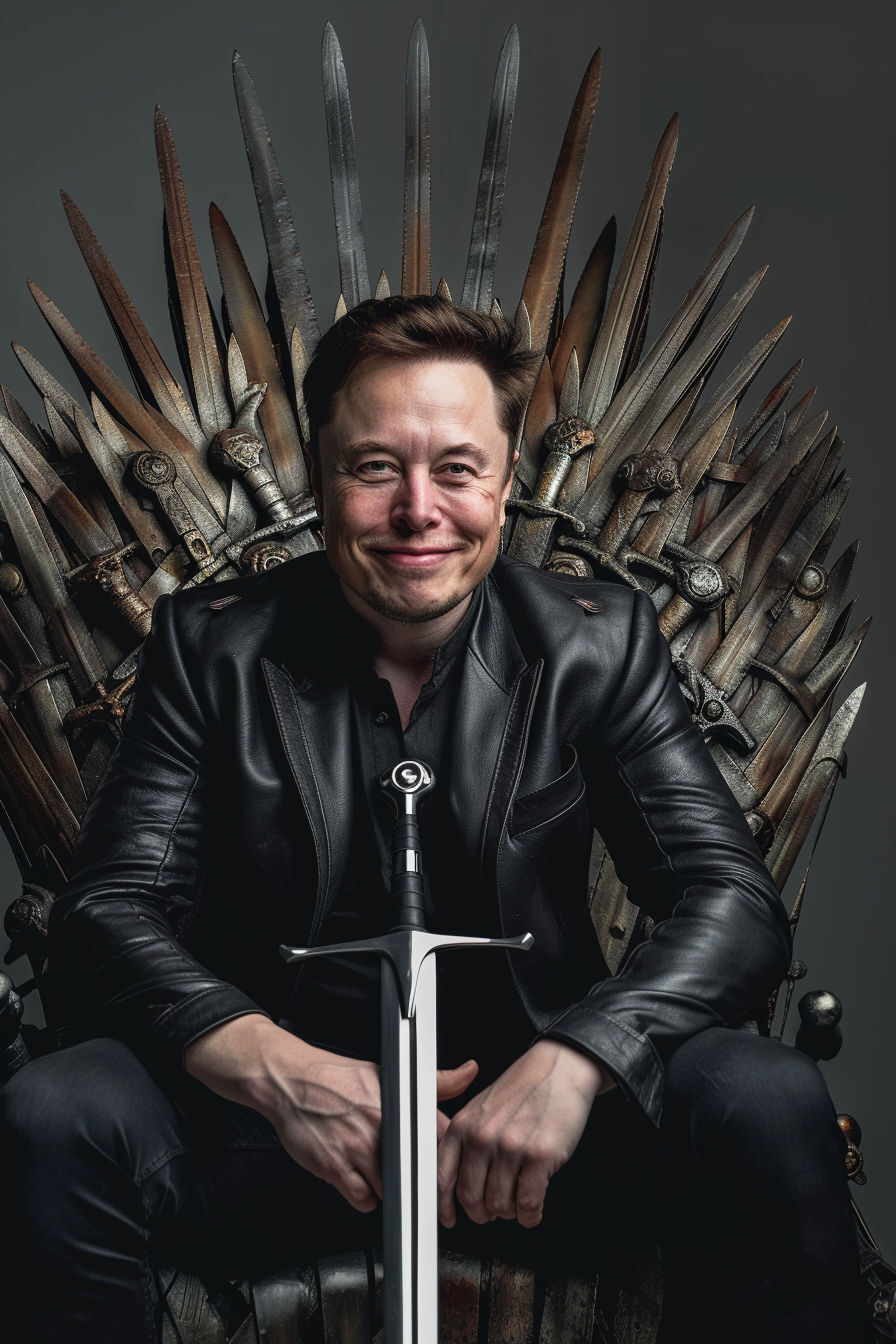
#GHOSTINTHEMACHINEFamous Space People on the Iron Throne
 01
 02
 03
 04
 05
 06
 07
 08
EOFUntil Next Time
#MISSIONDEBRIEFGetting Better Together
I value your opinion, so if you have specific advice or anything interesting you’d like to share, please let me know on LinkedIn.
Thank you for reading and see you at the next orbit!
P.S. New here? Get the next issue in your inbox: [ subscribe --free ]