T019 // Dispute Resolution in the Space Sector
Plus The increased congestion of Earth's orbits, a nuclear disaster from space, latest investments in the Space Economy, and Sweet Dreams (Are Made of Space)
 FIG. 01 · T019 COVERREC ●TRANSMISSION T019
#LAUNCHPADIn today’s edition
G’day Trailblazers!
We’re Trailblazers, the Space Newsletter that doesn’t shy away from dispute resolutions in space—even when conflicts are as vast as the cosmos, we find a way to bring them down to Earth for a peaceful resolution!
- #BEYONDTHEHYPEDispute Resolution in the Space Sector
- #STARGRAPHSignificant Incidents & Close Calls in Human Spaceflight
- #PRODUCTIVITY5 Resources to Boost Your Workflows
- #DEALFLOWThe Latest Investments in the Space Economy
- #OUTOFTHISWORLDAnti-Gravity Technology: A Glimpse into the Future
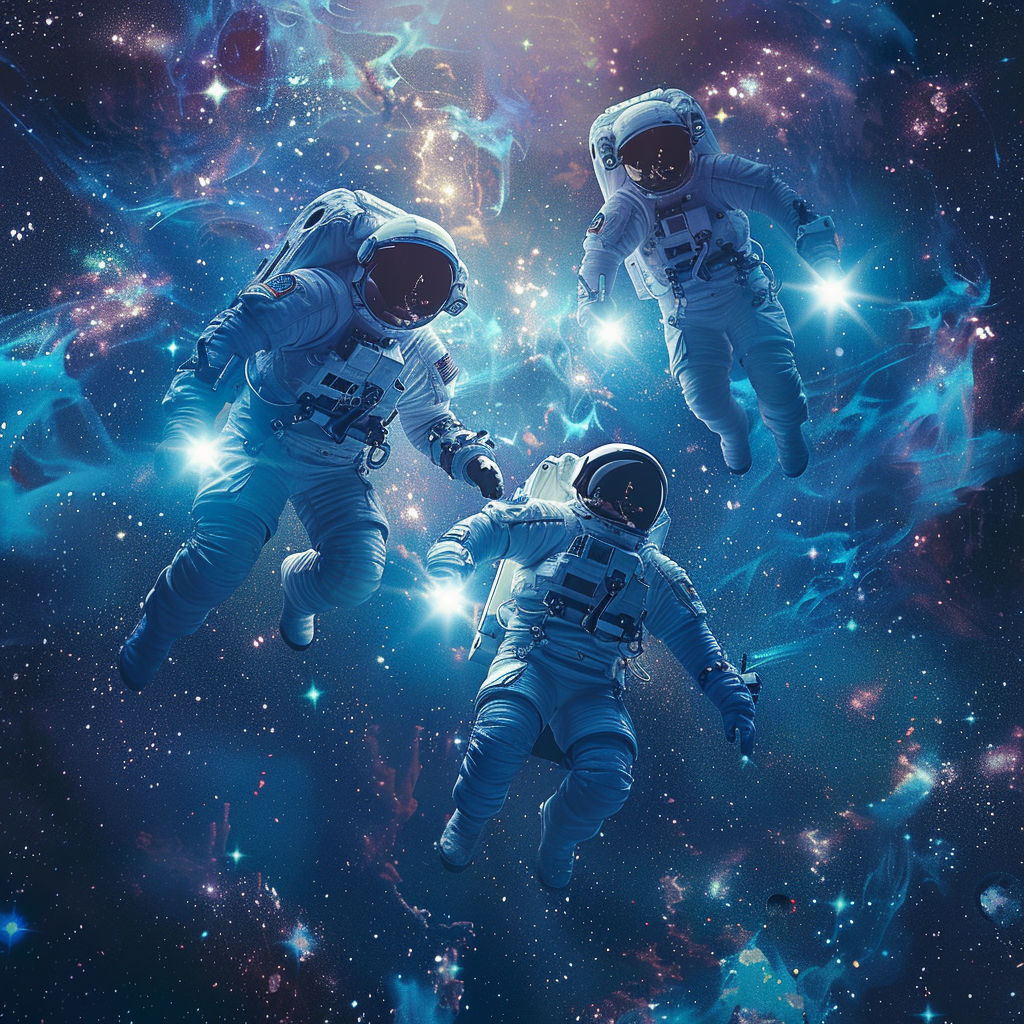
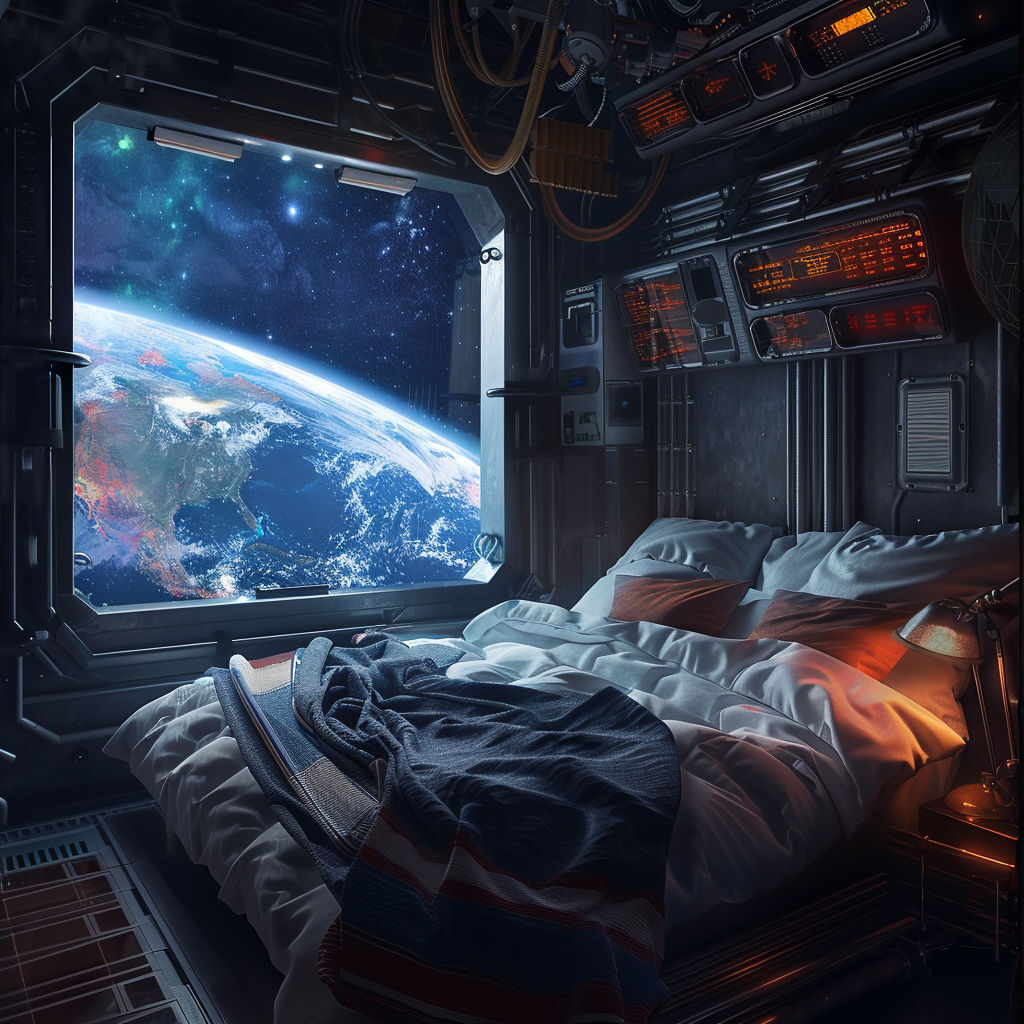
- #GHOSTINTHEMACHINESweet Dreams (Are Made of Space)
#TOGETHERWITHTake your space career from if, to when, to how
 SPONSOR TRANSMISSION · COURSERA
Sponsored · COURSERA
Whether you're looking to start a new career in the space industry or advance in your current field, Coursera Plus offers a wide range of programs in space and high-growth fields such as cybersecurity, data analytics, AI and more.
Archived sponsor message from 02 MAY 2024.
#NEWSSpace Economy Bites & Snaps
Orbital congestion
A new report from Slingshot Aerospace warns that Earth's orbits are becoming dangerously crowded, with over 12,500 satellites currently in orbit, including 3,356 inactive ones.
SES Strategy
SES outlines its strategic reasons for the long expected takeover of Intelsat. SES's $3.1 billion all-cash acquisition of Intelsat will create a satellite communications powerhouse with expanded capabilities, improved financials, and greater value for customers across key market segments.
- SNAP · 01Policy Boon: India’s space policy fuels startup boom, propelling nation's space industry to new heights.
- SNAP · 02Innovation: NASA selects nine companies to explore Mars mission concepts, boosting space economy.
- SNAP · 03STM Subscription: NeuraSpace launches free and pro tiers for Space Traffic Management, aiding satellite safety.
- SNAP · 04OZ Launch: Koonibba to host largest domestic commercial rocket launch, expanding Australia's role in the space economy.
- SNAP · 05Space Solar: South Korea's space-based solar plan could outpower all US nuclear facilities.
#REALLY?Kosmos 954: The Nuclear Disaster from Space
Kosmos 954 was a Soviet reconnaissance satellite launched in 1977, powered by a nuclear reactor.
It malfunctioned and crashed into the Northwest Territories, Canada, on January 24, 1978, scattering radioactive debris over a large area. The incident prompted a significant cleanup operation, "Operation Morning Light," involving Canadian and US forces. Despite efforts, only a small fraction of the satellite's nuclear fuel was recovered.
This incident raised international concerns about nuclear-powered satellites and led to a diplomatic dispute between Canada and the Soviet Union. It culminated in a settlement where the Soviet Union agreed to pay Canada 3 million Canadian dollars in compensation. The settlement, formalized in a protocol signed in Moscow in 1981, resolved all matters connected with the satellite's disintegration, including Canada's claim for damages. This agreement underscored the application of international law to space accidents and set a precedent for handling similar incidents.
#MARKETWATCHInvesting in the Universe
| FUND | PRICE | CHANGE |
|---|---|---|
| Procure Space ETF (UFO) | $15.49 | ▲ +1.2% |
| RK Space Exploration and Innovation (ARKX) | $14.72 | ▲ +0.3% |
| S&P Kensho Final Frontiers (ROKT) | $43.57 | ▲ +0.1% |
#BEYONDTHEHYPEThoughts and Opinions
Dispute Resolution in the Space Sector
As readers of this publication are well aware, the space sector is growing at exponential rates. With this growth comes an increased risk of disputes. In addition to typical contractual disputes such as late delivery or manufacturing disputes for example, increased risk arises out of the growing scarcity of orbital resources. The Lower Earth Orbit (LEO), where much of the current economic developments are taking place, is starting to be crowded, and so is the radiofrequency spectrum that satellites use to emit and receive signals. As a consequence, disputes are likely to arise out of the growing collision risk in LEO as well as out of the increased risk of harmful interference in the radio frequency spectrum. In addition, the space industry is a highly regulated industry that depends on government authorizations and licenses, meaning that the space industry is facing a high political risk. Disputes can arise, and have already arisen, out of political change that results in the modification or cancellation of licenses and government contracts. Finally, legal uncertainty surrounding the exact definition of where outer space begins and ends, as well as regarding the ownership of space resources, have the potential of giving rise to disputes in the future.
How will these disputes be solved? Any dispute can be brought before a domestic court. However, this can be complicated by doubts over which court would be competent to hear a certain dispute, language barriers, potential bias or sovereign immunity issues in disputes with States or public entities, and the likely lack of familiarity of (some) domestic judges with the details of the space industry. Alternatively, contractual disputes can be solved through international arbitration, if the contract contains an arbitration clause, or the parties agree to arbitrate a dispute once it has already arisen. International arbitration has many advantages such as the right of the parties to choose the decision-makers, the language and timetable of the proceedings, and enhanced confidentiality. Arbitration awards are also more easily enforceable internationally than foreign court judgments.
Investors in the space industry should also know that their investments, if made in a foreign country, might be covered by so-called investment protection treaties. Under these treaties, governments make mutual commitments to protect foreign investors and their investments in their territories. Typical protections include, for example, the prohibition of direct and indirect expropriation without just compensation, as well as the guarantee of “fair and equitable treatment” and “full protection and security”. If a State breaches these international obligations, the investor in question has the right to claim compensation before an international arbitral tribunal. The applicable standard of compensation is to put the investor into the position in which it would have been but for the treaty breaches, and is often favorable to the investor.
In a growing industry that is likely to see a rise in disputes in the coming years, participants should be aware of options they have beyond domestic courts and domestic law. The space industry is international with most single transactions involving at least two or more jurisdictions. This opens the door for international dispute resolution and space actors should be familiar with these options.
#TOGETHERWITHElevate Your Space Projects to New Heights with Notion!
 SPONSOR TRANSMISSION · NOTION
Sponsored · NOTION
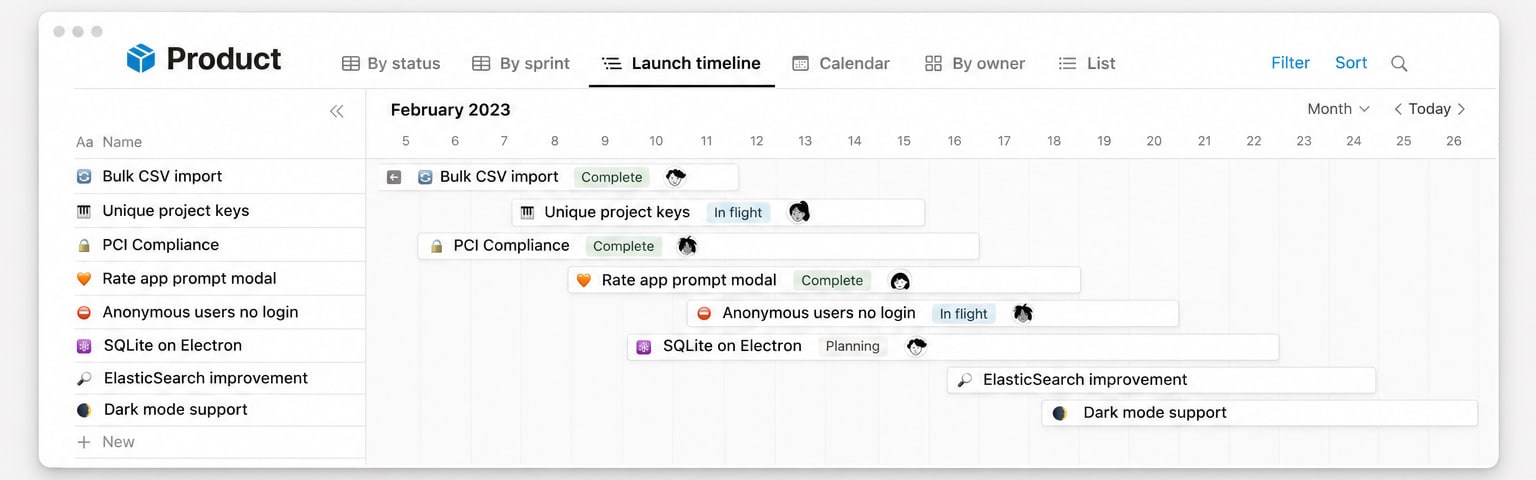
In the fast-paced space industry, efficient project management isn't just a necessity—it's a game changer. Notion offers a versatile platform that adapts to your diverse professional needs, whether you're an engineer designing the next-generation satellite, a lawyer navigating complex regulatory landscapes, or a marketer telling the story of your space venture. Notion brings all your work into one unified space, facilitating collaboration, tracking progress, and ensuring that your team stays aligned and focused on the mission ahead. Transform how you manage projects, from ideation to launch, with Notion's customizable templates and integrative features.
Archived sponsor message from 02 MAY 2024.
#STARGRAPHSignificant Incidents & Close Calls in Human Spaceflight
#PRODUCTIVITY5 Resources to Boost Your Workflows
- TOOL · 01Yuna → A mental health app that utilizes AI to monitor and chart your mental wellness journey over time.
- TOOL · 02SecBrain → Boost productivity with AI by saving and organizing ideas, videos, meetings, and more.
- TOOL · 03Notion AIPROMOTED → An AI platform that helps users organize and manage their tasks, projects, and notes. Try it now.
- TOOL · 04The Business, Politics, Policy, & Players of Space ProgramsPROMOTED → Explore funding sources, players, and applications in space exploration.
- TOOL · 05Generative AI for EveryonePROMOTED → Led by AI pioneer Andrew Ng, this course demystifies generative AI, covering its capabilities, limitations, and practical applications. Features hands-on exercises, prompt engineering tips, and insights into its societal and business impacts. Designed to make generative AI accessible to all.
#DEALFLOWThe Latest Investments in the Space Economy
- 01NASA allocates $3.9 million in grants to bolster STEM diversity through academic partnerships.$3.9 million
- 02Astroscale to go public on Tokyo Stock Exchange, aims to raise $100 million for space debris removal services.$100 millionRAISE
- 03Portal Space Systems emerges with over $3M for Supernova spacecraft to revolutionize space maneuverability.$3M
- 04Millennium Space Systems secures $414M Space Development Agency contract to develop fire-control satellite constellation.$414MCONTRACT
- 05SES acquires Intelsat in a strategic $3.1 billion deal to enhance satellite services and competitiveness.$3.1 billionACQUISITION
- 06Nominal secures $27 million to advance hardware and software innovation for engineering.$27 millionRAISE
- 07Blue Skies Space secures over £2M for 2025 launch of first stargazing satellite.£2MRAISE
- 08PLD Space secures €120 million to expand facilities and boost rocket production capacity.€120 millionRAISE
- 09Nabhdrishti Aerospace raises ~$360K in pre-seed funding to pioneer gas turbine engine development.$360KPRE-SEED
- 10Seraphim Space launches new VC fund to drive innovation in space tech, focusing on AI and in-orbit computing.
- 11Dhruva Space raises $15 million in Series A to expand manufacturing and pursue strategic acquisitions.$15 millionSERIES A
- 12ICEYE secures $93M to expand synthetic aperture radar (SAR) satellite operations and develop new Earth observation technologies.$93MRAISE
- 13ispace secures $45M loan to fund upcoming lunar lander missions and plans satellite communications network.$45MLOAN
- 14Dark extends seed round to $11M with new US investor Long Journey joining Eurazeo and Frst.$11MSEED
#OUTOFTHISWORLDAnti-Gravity Technology: A Glimpse into the Future

Anti-gravity technology, a concept often found in science fiction, refers to the theoretical ability to counteract or negate the force of gravity. This technology would allow objects to float or fly without the need for conventional propulsion methods. Despite its prevalence in novels and movies, anti-gravity remains largely speculative and unproven in the realm of real-world physics.
The exploration of anti-gravity technology spans various approaches and theories, from manipulating electromagnetic fields to experimenting with exotic matter. One notable endeavor is the research conducted at CERN with the ALPHA experiment, which investigates the gravitational behavior of antimatter. Another one is from US Navy scientist Salvatore Pais, who proposed the "Pais Effect," described as the controlled motion of electrically charged matter via accelerated spin and/or accelerated vibration under rapid acceleration transients. This effect, if proven, could potentially lead to breakthroughs in propulsion and energy generation.
Dr. Salvatore Pais. High frequency gravitational wave generator. Google Patents.
Another area of interest is the investigation of Unidentified Aerial Phenomena (UAPs), such as the "Tic Tac" objects encountered by Navy pilots. These encounters, documented and analyzed by military and civilian researchers, suggest the existence of objects with flight characteristics beyond current technological capabilities, possibly hinting at anti-gravity or advanced propulsion mechanisms.
“Tic Tac” Unidentified Aerial Phenomenon. U.S. Department of Defense.
The Gravity Research Institute of the Göde Scientific Foundation has offered a €1M reward for a reproducible anti-gravity experiment, highlighting the ongoing interest and investment in understanding and potentially harnessing gravity. This initiative, along with others like the Alt Propulsion community, underscores the diverse and interdisciplinary efforts to explore and possibly realize anti-gravity technology.
The potential applications of anti-gravity technology are vast and transformative. In transportation, it could lead to vehicles that float above the ground, reducing friction and energy consumption. In space exploration, anti-gravity could revolutionize spacecraft propulsion, making interstellar travel more feasible by reducing the need for massive fuel reserves.
Moreover, anti-gravity technology could have significant implications for energy generation, transport, real estate, manufacturing, and even medical fields by enabling new forms of mobility and support for individuals with physical disabilities. The ability to control or negate gravity would also have profound effects on construction, allowing for the creation of structures that defy current architectural limitations.
Despite the exciting prospects, the path to realizing anti-gravity technology is fraught with scientific and technological hurdles. Our current understanding of physics does not support the existence of anti-gravity as we imagine it in science fiction. However, the ongoing research into the fundamental nature of gravity and the properties of antimatter, along with speculative theories on mass manipulation and space-time curvature, keep the dream of anti-gravity alive.
While anti-gravity technology remains within the realm of speculation and theoretical physics, its potential to revolutionize multiple aspects of human civilization makes it a captivating subject of study. And we should keep studying it! As our understanding of the universe expands, so too does the possibility of one day turning the science fiction dream of anti-gravity into reality.
#GHOSTINTHEMACHINESweet Dreams (Are Made of Space)
 01
 02
 03
 04
 05
 06
EOFUntil Next Time
#MISSIONDEBRIEFGetting Better Together
I value your opinion, so if you have specific advice or anything interesting you’d like to share, please let me know on LinkedIn.
Thank you for reading and see you at the next orbit!
P.S. New here? Get the next issue in your inbox: [ subscribe --free ]