T015 // The Rising Influence of High-Altitude Platform Stations (HAPS)
Plus Space debris hitting homes, the cost of NASA spacesuits, latest investments in the Space Economy, and exploring the origins of Life with blockchain technology
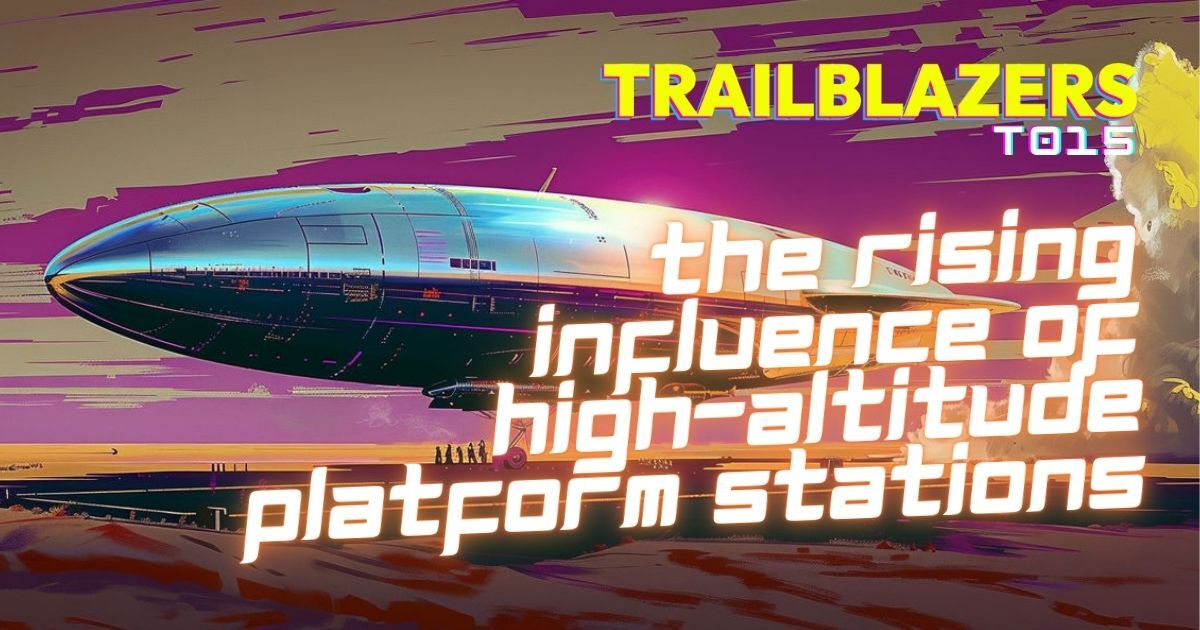 FIG. 01 · T015 COVERREC ●TRANSMISSION T015
#LAUNCHPADIn today’s edition
G’day Trailblazers!
We’re Trailblazers, the Space Newsletter that brings you closer to the edge of innovation, where stratospheric machines and satellites meet to redefine the boundaries of high-altitude connectivity and Earth observation—no airspace too high, no detail too small.
- #EVENTHORIZONThe Rising Influence of the Stratosphere for Satellite-like Missions
- #STARGRAPHHow High-Altitude Platform Stations (HAPS) Work
- #PRODUCTIVITY5 Resources to Boost Your Workflows
- #DEALFLOWThe Latest Investments in the Space Economy
- #OUTOFTHISWORLDExploring the Origins of Life with Blockchain Technology
- #GHOSTINTHEMACHINESpace imagery in Papier Couché Art
#TOGETHERWITHTake your space career from if, to when, to how
 SPONSOR TRANSMISSION · COURSERA
Sponsored · COURSERA
Whether you're looking to start a new career in the space industry or advance in your current field, Coursera Plus offers a wide range of programs in space and high-growth fields such as cybersecurity, data analytics, AI and more.
Archived sponsor message from 05 APR 2024.
#NEWSSpace Economy Bites & Snaps
Danger from Above
Space debris, likely from the International Space Station, landed on a Florida home, highlighting the increasing issue of space junk re-entering Earth's atmosphere and posing risks to people and property.
Starlink & Agriculture
John Deere teams up with SpaceX, integrating Starlink connectivity into agricultural machines to revolutionize farming with high-speed, autonomous operations set to transform global food production.
- SNAP · 01Commercial Strategy: DoD's new plan aims to boost national security by integrating commercial space tech.
- SNAP · 02Sustainability: Direct-to-smartphone satellites could be the key to more sustainable space operations.
- SNAP · 03Lunar Construction: NASA's new soil study is key to building the first moon base sustainably.
- SNAP · 04Mars Plan: Royal Astronomer calls Elon Musk's vision for Mars colonization a "dangerous delusion."
- SNAP · 05Starship: SpaceX's fourth test flight looms as Super Heavy booster moved to pad.
#REALLY?Astronauts’ Spacesuits Are Expensive!
The cost of a modern NASA spacesuit varies depending on the model and the era it was developed.
For the spacesuits made in 1974, the estimated price was between $15 million and $22 million. Each! However, the next-generation spacesuits, known as the Exploration Extravehicular Mobility Unit (xEMU), are expected to be even more expensive. Between 2008 and 2021, NASA spent $420 million developing the xEMU technology, and by the time two units are ready for use, which is anticipated to be around April 2025, NASA will likely have spent over $1 billion on the spacesuits. This puts the cost of each xEMU at around $500 million.
Additionally, Axiom Space was awarded a contract worth $228.5 million USD (which is approximately $341.3 million Australian dollars) to design the next-generation spacesuit for NASA's Artemis program. This contract is for the design of the suit, and it is not a per-unit cost. It's important to note that these figures include development and assembly costs, not just the production of individual suits.
#MARKETWATCHInvesting in the Universe
| FUND | PRICE | CHANGE |
|---|---|---|
| Procure Space ETF (UFO) | $16.18 | ▲ +0.3% |
| RK Space Exploration and Innovation (ARKX) | $14.66 | ▲ +0.3% |
| S&P Kensho Final Frontiers (ROKT) | $44.02 | ▲ +0.2% |
#EVENTHORIZONThe Rising Influence of the Stratosphere for Satellite-like Missions
The stratosphere is emerging as a valuable and cost-efficient region for executing missions that were traditionally the domain of satellites. This layer of the Earth's atmosphere, situated approximately 20 kilometers above the surface, is now accessible for a variety of applications thanks to advancements in technology. High-altitude platform stations (HAPS), stratospheric balloons, and other innovative vehicles are being developed and deployed to leverage the unique advantages of this near-space environment.
HAPS are platforms that operate in the stratosphere to provide services such as broadband connectivity, disaster recovery communications, and Earth observation. These can be airships or unmanned aerial vehicles (UAVs), benefiting from recent technological improvements in solar power, battery storage, materials science, and autonomous flight systems. They represent a bridge between terrestrial telecommunications infrastructure and satellite networks, offering a blend of the advantages of both. Projects like HAPSMobile, Airbus Zephyr, Stratosyst, or Devorto are trailblazing in this segment.
Stratospheric balloons are another tool for accessing the stratosphere at a lower cost and with less environmental impact than rocket-launched satellites. These balloons can carry payloads for scientific research, telecommunications, and even for launching small satellites into orbit from high altitudes. Projects like Zero 2 Infinity's Bloostar are exploring the potential of balloons for sustainable and reusable access to space, highlighting the minimal environmental footprint of such missions.
The utilization of the stratosphere for satellite-like missions is significant for several reasons:
Cost-Effectiveness: The ability to conduct near-space missions at a fraction of the cost of traditional satellite operations opens up new possibilities for startups, research institutions, and countries with limited space budgets.
Environmental Sustainability: Stratospheric missions, particularly those using balloons, offer a more sustainable alternative to rocket launches, with fewer emissions and less space debris.
Operational Flexibility: The deployment of HAPS and balloons can be achieved more rapidly than satellite launches, allowing for quick response to natural disasters, changes in demand for telecommunications services, and other dynamic situations.
Technological Innovation: The development of stratospheric platforms is driving advancements in a range of technologies, from materials and propulsion to communications and autonomous systems, contributing to the broader aerospace and telecommunications sectors.
In essence, the growing influence of the stratosphere in conducting traditional satellite-like missions at reduced costs and with increased sustainability and flexibility marks a interesting shift in near-space utilization. This development not only opens up new opportunities for scientific research and commercial ventures but also plays a role in addressing global challenges such as broadband connectivity and environmental monitoring. Now, imagine “connecting” these platforms to space-based solar power for infinite autonomy… 🌞🌱
#TOGETHERWITHElevate Your Space Projects to New Heights with Notion!
 SPONSOR TRANSMISSION · NOTION
Sponsored · NOTION
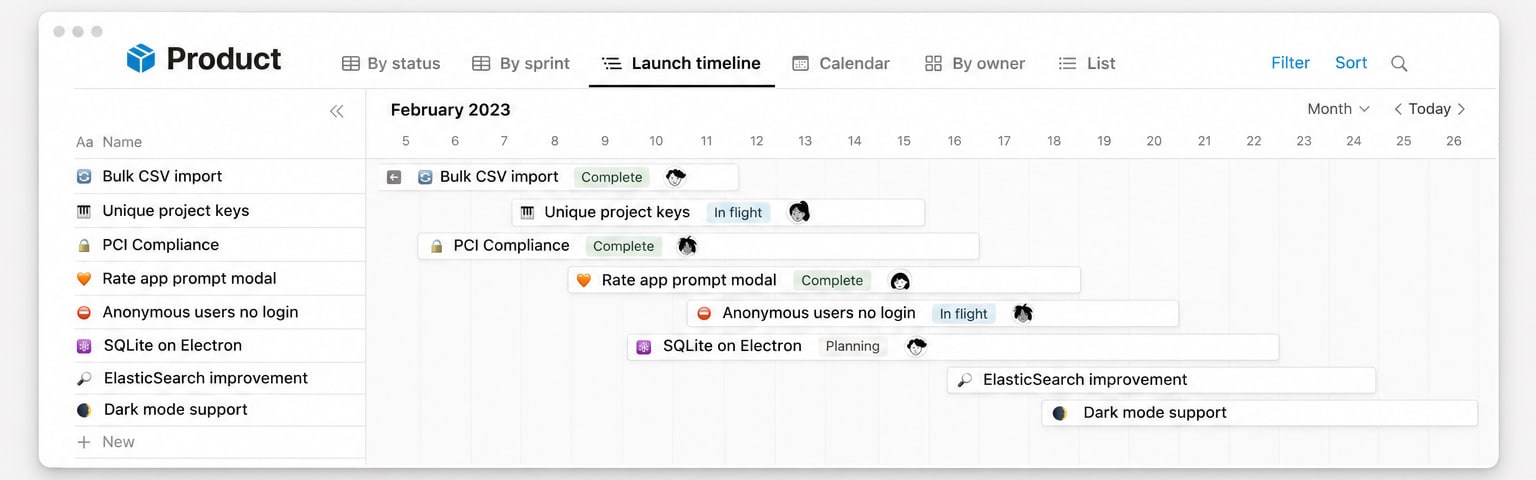
In the fast-paced space industry, efficient project management isn't just a necessity—it's a game changer. Notion offers a versatile platform that adapts to your diverse professional needs, whether you're an engineer designing the next-generation satellite, a lawyer navigating complex regulatory landscapes, or a marketer telling the story of your space venture. Notion brings all your work into one unified space, facilitating collaboration, tracking progress, and ensuring that your team stays aligned and focused on the mission ahead. Transform how you manage projects, from ideation to launch, with Notion's customizable templates and integrative features.
Archived sponsor message from 05 APR 2024.
#STARGRAPHHow High-Altitude Platform Stations (HAPS) work
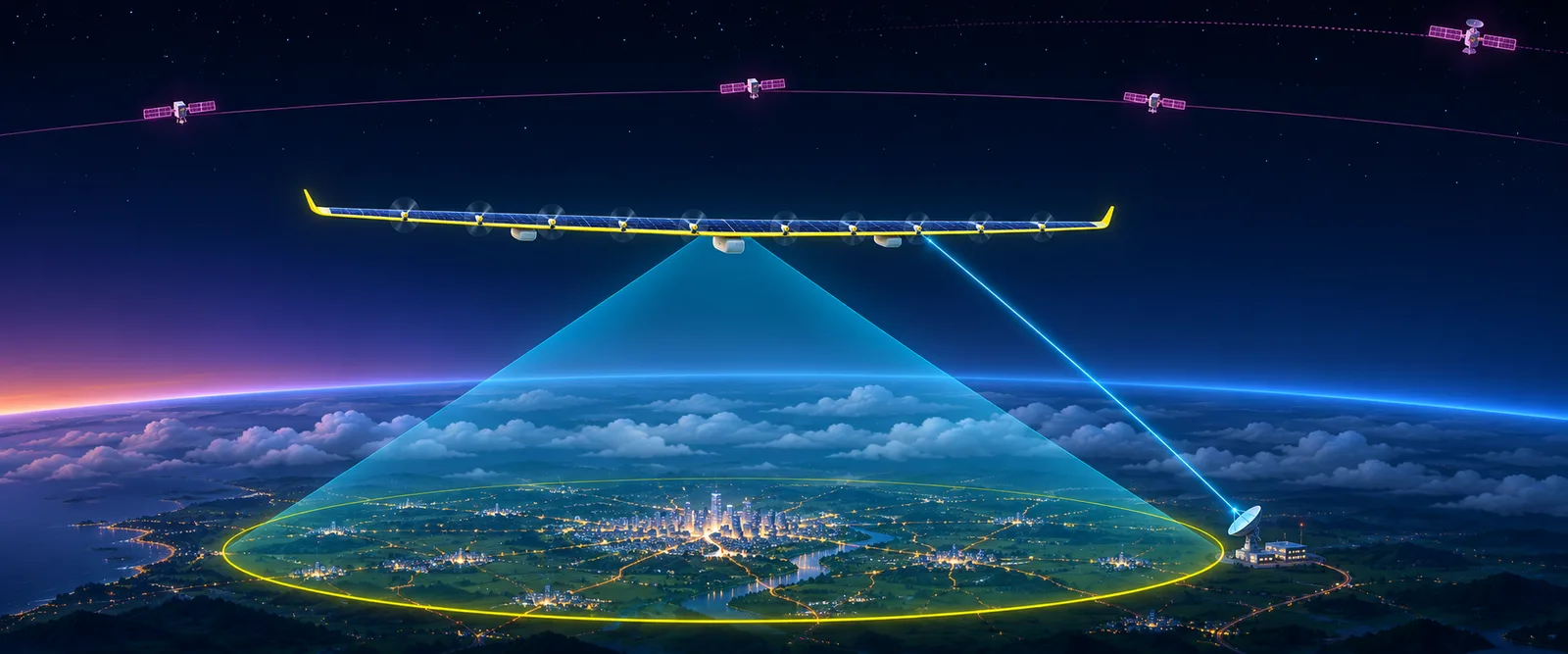 LEO 550-1,200 kmHAPS ~20 kmFeeder linkCoverage Ø ~200 km
#PRODUCTIVITY5 Resources to Boost Your Workflows
- TOOL · 01HeadshotPro → Simplifies professional corporate headshots: Upload photos, choose a style, and get 120+ generated headshots, ideal for individuals or teams.
- TOOL · 02Book Summarizer → An AI tool that quickly summarizes books, saving hours of reading. Gain knowledge and insights quickly.
- TOOL · 03Notion AIPROMOTED → An AI platform that helps users organize and manage their tasks, projects, and notes. Try it now.
- TOOL · 04Space MedicinePROMOTED → A free online course exploring health in space exploration. No prior experience needed. Learn about human health challenges and solutions for space travel.
- TOOL · 05Space SafetyPROMOTED → Online course led by astronaut Dr. Thomas Reiter and ESA experts, focusing on satellite safety, space debris, and astronaut well-being. Covers key topics like collision avoidance and cybersecurity.
#DEALFLOWThe Latest Investments in the Space Economy
- 01Bright Ascension raises £2.3M for space software innovation, boosting HELIX product market entry.£2.3MRAISE
- 02OTB Ventures launches $185M fund to support European DeepTech startups.$185M
- 03Rocket Lab sets Q1 2024 financial results announcement for May 6, plans live webcast.
- 04MBryonics receives €17.5M from European Innovation Council for space tech advancements in Galway, Ireland.€17.5M
- 05Astrolab wins up to $1.9 billion NASA contract for Artemis lunar terrain vehicle development.$1.9 billionCONTRACT
- 06Washington University and Impossible Sensing receive $3M NASA grant for moon research sensor development in St. Louis, USA.$3MGRANT
- 07Spire Global closes $30 million offering, plans to expand optics and photonics manufacturing in Ireland.$30 millionRAISE
- 08AERKOMM merges with IX Acquisition in $235M deal, for satellite technology providing multi-orbit broadband connectivity solutions.$235MACQUISITION
- 09Ingersoll Rand to acquire ILC Dover for $2.325 billion, expanding into aerospace with spacesuits and inflatable modules.$2.325 billionACQUISITION
- 10Telesat and Canada Government finalize C$2.14 billion loan for Telesat Lightspeed LEO satellite network.$2.14 billionLOAN
- 11ispace raises $53.5 million through stock sale to fund future lunar missions, including a far side moon lander.$53.5 millionRAISE
- 12TransUnion invests in SatSure, advancing agricultural finance in India with AI and satellite imagery.INVESTMENT
- 13HawkEye 360 secures $40 million debt financing to expand geospatial capabilities and satellite constellation.$40 millionDEBT
- 14Helicity Space receives investment from Lockheed Martin Ventures for fusion propulsion development, following a $5 million seed round.$5 millionSEED
- 15Matter Venture Partners launches with $300M fund for hard tech innovations.$300M
#OUTOFTHISWORLDExploring the Origins of Life with Blockchain Technology

Blockchain technology, widely recognized for its role in powering cryptocurrencies, is now being explored for its potential to simulate complex chemical reactions that could reveal insights into the origins of life on Earth. This innovative application involves using blockchain's computational capabilities and distributed ledger system to model and analyze the myriad of chemical interactions that might have led to the emergence of life.
Researchers have reimagined the use of blockchain beyond its financial applications, employing it to create a vast network of chemical reactions known as the Network of Early Life (NOEL). This project started with simple molecules such as water, ammonia, and methane, believed to be present on the early Earth, and utilized smart contracts to simulate over 11 billion chemical reactions. Of these, 4.9 billion were plausible, with more than 100 identified as self-replicating reactions. The blockchain's distributed nature allowed this massive computational task to be shared across hundreds of computers worldwide, significantly reducing the resources and time typically required for such extensive simulations.
The application of blockchain technology in studying the origins of life has significant implications for space exploration and our understanding of the cosmos. By identifying chemical pathways that could lead to life, these simulations can guide the search for extraterrestrial life, informing astrobiologists and space missions about the most promising locations and conditions for life beyond Earth. This approach could also enhance the design of life-detection instruments for future space missions, aiming to identify similar chemical signatures and processes on other planets and moons.
Moreover, understanding the chemical origins of life on Earth helps us consider the potential ubiquity of life in the universe. If the conditions and reactions leading to life here are not unique, it suggests that life could be more common across the cosmos, impacting the search for extraterrestrial intelligence and our philosophical perspectives on our place in the universe. Blockchain's role in this field underscores its potential to extend our scientific inquiry beyond our planet, probing the fundamental question of whether we are alone in the universe.
#GHOSTINTHEMACHINESpace imagery in Papier Couché Art
 01
 02
 03
 04
EOFUntil Next Time
#MISSIONDEBRIEFGetting Better Together
I value your opinion, so if you have specific advice or anything interesting you’d like to share, please let me know on LinkedIn.
Thank you for reading and see you at the next orbit!
P.S. New here? Get the next issue in your inbox: [ subscribe --free ]