T016 // Space Law and Artificial Intelligence
Plus Starlink challenges, a solar eclipse on Mars, the latest developments in space governance, regulations & policy, and how people in the 1800s envisioned the future
 FIG. 01 · T016 COVERREC ●TRANSMISSION T016
#LAUNCHPADIn today’s edition
G’day Trailblazers!
We’re Trailblazers, the Space Newsletter that navigates the crossroads of space law and AI, where every decision could be as groundbreaking as discovering water on Mars 🤔🤷♀️.
- #EVENTHORIZONSpace Law and Artificial Intelligence
- #STARGRAPHSpaceX: Starlink vs Launch
- #PRODUCTIVITY5 Resources to Boost Your Workflows
- #SPACEREGSDevelopments in space governance, regulations & policy
- #INTHELOOPTech Trends on Earth Shaping Our Future in Space
- #GHOSTINTHEMACHINEHow People in the 1800s Envisioned the Future
#TOGETHERWITHManage Any Space Project, Your Way
 SPONSOR TRANSMISSION · monday.com
Sponsored · monday.com
Elevate your space projects with monday.com! 🚀
Archived sponsor message from 11 APR 2024.
#NEWSSpace Economy Bites & Snaps
Starlink Challenges
… but despite Elon Musk's claims of profitability for SpaceX's Starlink, another report by Bloomberg suggests the venture may be losing hundreds of dollars per terminal, questioning its financial viability.
- SNAP · 01Space Media: From Kennedy's vision to digital evolution, exploring the media's transformative impact on the space economy.
- SNAP · 02Farming: UK's space tech leap, funding space farms and AI, strengthens global space economy ties.
- SNAP · 03Another Report: World Economic Forum sees space economy soaring to $1.8 trillion by 2035, boosting global industries.
- SNAP · 04Novaspace: Euroconsult and SpaceTec Partners merge, launching Novaspace to enhance global space industry consultancy.
- SNAP · 05Wildfires: Satellite insights and AI revolutionize tree management, slashing wildfire risks by 72% in high-risk areas.
⭐ SpaceX-ponential: in an April 2024 email report, analysts at Morgan Stanley have assessed SpaceX's private market worth at approximately $180 billion (€165.7 billion). They estimate that 60% of this valuation, which equates to around $108 billion, is attributed solely to the revenues generated by Starlink…
#REALLY?What Does A Solar Eclipse On Mars Look Like?
NASA's Perseverance rover captured solar eclipses on Mars by its moons, Phobos and Deimos, showing them as small shapes across the Sun.
Deimos, small and irregular, crossed the Sun in January, while Phobos, larger at 14 miles wide, appeared in February. The rover also noted Mercury's transit as a tiny speck. These observations, less visually striking than Earth's eclipses, are scientifically crucial for tracking the moons' changing orbits. Particularly, Phobos is drawing nearer to Mars by six feet every century, potentially leading to a future collision or formation of a debris ring.
#MARKETWATCHInvesting in the Universe
| FUND | PRICE | CHANGE |
|---|---|---|
| Procure Space ETF (UFO) | $15.97 | ▼ -1.5% |
| RK Space Exploration and Innovation (ARKX) | $14.55 | ▼ -1.9% |
| S&P Kensho Final Frontiers (ROKT) | $43.13 | ▼ -1.4% |
#EVENTHORIZONThe Intersection of Space Law and Artificial Intelligence
The integration of Artificial Intelligence (AI) into space activities has prompted a reevaluation of existing space law frameworks, including foundational treaties like the Outer Space Treaty. This intersection raises complex legal, ethical, and operational questions, necessitating a nuanced understanding of both domains.
01What is it?
Space Law encompasses international and national laws and agreements that govern human activities in outer space. Key documents include the Outer Space Treaty (1967), which establishes principles for the exploration and use of outer space. Artificial Intelligence, on the other hand, refers to the development of computer systems capable of performing tasks that typically require human intelligence. As AI technologies advance, their application in space activities—from satellite operations to deep space exploration—is becoming increasingly prevalent.
02The Details
The advent of AI in space activities introduces new dimensions to the legal challenges traditionally addressed by space law. These challenges include the autonomy of AI systems, their decision-making capabilities without direct human oversight, and the implications for liability and responsibility in the event of accidents or damages caused in space. For instance, the Outer Space Treaty mandates that states bear international responsibility for national space activities, including those conducted by non-governmental entities. However, the attribution of liability becomes complex when autonomous AI systems, capable of independent decision-making, are involved.
The integration of AI into space activities also raises questions about the applicability of existing legal frameworks. For example, the Liability Convention (1972) outlines the procedures for damage caused by space objects, but its provisions may not fully account for incidents involving AI-driven spacecraft or satellites. Furthermore, the deployment of AI in space missions, such as autonomous navigation or collision avoidance systems, necessitates a reevaluation of what constitutes "meaningful human control" over space objects.
03Why It Matters
The intersection of space law and AI is important for several reasons. Firstly, it influences the future governance of outer space activities, ensuring that they are conducted for the benefit of all humanity while minimizing risks. Secondly, addressing the legal challenges posed by AI in space is essential for encouraging innovation and ensuring that advancements in space technology are developed and used responsibly.
Moreover, the integration of AI into space activities has the potential to significantly enhance the efficiency, safety, and scientific capabilities of space missions. However, without clear legal frameworks that address the unique challenges posed by AI, there could be uncertainties that hinder collaboration, investment, and progress in the space sector.
As AI becomes increasingly integrated into space activities, the relevance of space law—and the need for its evolution—becomes ever more apparent. Ensuring that space law frameworks accommodate the complexities of AI will be an important step for the sustainable and peaceful use of outer space, promoting international cooperation, and safeguarding the interests of all states and stakeholders involved in space exploration and utilization.
We will be covering more on this topic in future editions of Trailblazers!
#TOGETHERWITHTake your space career from if, to when, to how
 SPONSOR TRANSMISSION · COURSERA
Sponsored · COURSERA
Reach your space career goals with Coursera Plus
Archived sponsor message from 11 APR 2024.
#STARGRAPHSpaceX: Starlink vs Launch
| Starlink | Launch | SpaceX total | |
|---|---|---|---|
| 2024 · Revenue | ~$7.9bn60% | ~$5.3bn40% | ~$13.2bn100% |
| 2024 · Operating income | ~$0.3bn4% | ~$0.5bn10% | ~$0.9bn7% |
| 2024 · Net income | ~$0.3bn3% | ~$0.4bn8% | ~$0.7bn5% |
| 2035 · Revenue | ~$74bn72% | ~$29bn28% | ~$104bn100% |
| 2035 · Operating income | ~$27bn37% | ~$8bn28% | ~$36bn34% |
| 2035 · Net income | ~$21bn28% | ~$6bn21% | ~$27bn26% |
#PRODUCTIVITY5 Resources to Boost Your Workflows
- TOOL · 01Magical AI → Auto-draft messages in 1-click, anywhere you have conversations. No annoying AI-training required.
- TOOL · 02Wonders AI → Easily explore and manage your curiosity with access to millions of scientific papers.
- TOOL · 03Monday.comPROMOTED → A collaboration platform that allows teams to focus on executing tasks, projects, and processes efficiently and achieve shared goals at scale.
- TOOL · 04Spacecraft Dynamics and Control SpecializationPROMOTED → Explore a career in Spacecraft Attitude Analysis. Master the theories and concepts of spacecraft attitude dynamics.
- TOOL · 05Digitalisation in Space ResearchPROMOTED → Explores digital applications in aerospace, including digitalisation's impact on satellite and manned spaceflight. Features a unit on AI in satellite data analysis.
#SPACEREGSDevelopments in space governance, regulations & policy
SpaceX Gen2 MSS Application Dismissed
The FCC's recent decision to deny SpaceX additional spectrum for its Starlink Gen 2 satellites underscores the fragile balance between innovation and regulation in the evolving space industry. This ruling highlights the challenges of expanding next-generation satellite services within the tightly regulated spectral environment.
NASA Sustainability Strategy
NASA is spearheading the development of a comprehensive framework for space sustainability, with a focus starting on Earth orbit and expanding to cislunar space. This initiative, led by Deputy Administrator Pam Melroy, aims to tackle the growing challenges of satellite congestion and space debris, ensuring future generations can continue to benefit from and access space. A Director of Space Sustainability will be appointed to drive this crucial effort.
Space Policy & Security
Space policy has evolved from a peripheral concern to a central element in national security discussions at the highest levels of government. This shift reflects the increasing importance of space in military, communication, and technological advancements, highlighting the strategic imperative of space capabilities in modern defense strategies. A transformation that underscores the need for rapid innovation and international cooperation in space.
EU Space Law Delays
The anticipated EU Space Law, aimed at protecting satellites from debris and promoting safer space operations, faces another delay, keeping the sustainability and safety of vital space infrastructures in limbo. Amidst urgent calls for action, this postponement highlights the challenges in establishing a unified regulatory framework to address space debris and ensure the growth of Europe's New Space sector.
Global SSA Vision
During the Space Symposium, the Office of Space Commerce unveiled a new framework proposing a future with internationally synchronized Space Situational Awareness (SSA) services. This vision includes our Traffic Coordination System for Space (TraCSS) as part of a network of national or regional centers offering SSA data and services to operators of spacecraft.
Universal Broadband Access
As the Affordable Connectivity Program nears its funding limit, urgent action is needed to prevent over 23 million low-income households from losing vital internet access. This scenario underscores the critical need for sustainable broadband support mechanisms, highlighting the FCC's role in modernizing the Universal Service Fund to ensure universal, affordable connectivity. An urgent call to action to maintain the digital lifeline for millions.
Space Taxes
Contrary to reports, the FAA has clarified that there are no current plans to implement taxes on commercial space launches. This decision underscores the ongoing discussions about funding air traffic control systems amidst the increasing volume of space flights, without placing new financial burdens on the burgeoning commercial space industry. A moment of relief for companies navigating the complex landscape of space regulation.
#INTHELOOPTech Trends on Earth Shaping Our Future in Space
Gravity-Free Tech
Okinawa Institute of Science and Technology demonstrates levitating graphite for advanced sensing technologies.
Intelligent Liquid
Harvard's new "intelligent liquid" could revolutionize robotics with programmable properties, promising unprecedented adaptability.
AI Milestone
Elon Musk predicts AI to outsmart the brightest minds within two years, stirring both excitement and skepticism.
Data Center Boom
AI's explosive growth propels a $2 trillion surge in data center market, reshaping tech's future landscape.
Solar Breakthrough
New quantum material propels solar cell efficiency to unprecedented 190%, potentially revolutionizing clean energy tech.
#GHOSTINTHEMACHINEHow People in the 1800s Envisioned the Future
 01
 02
 03
 04
 05
 06
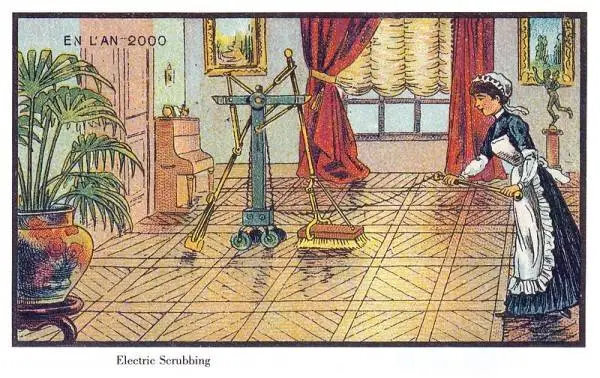
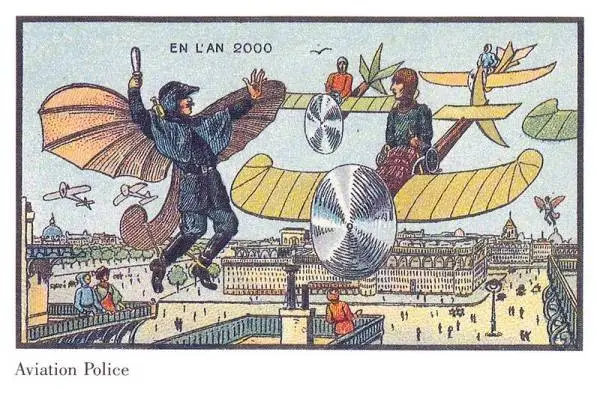
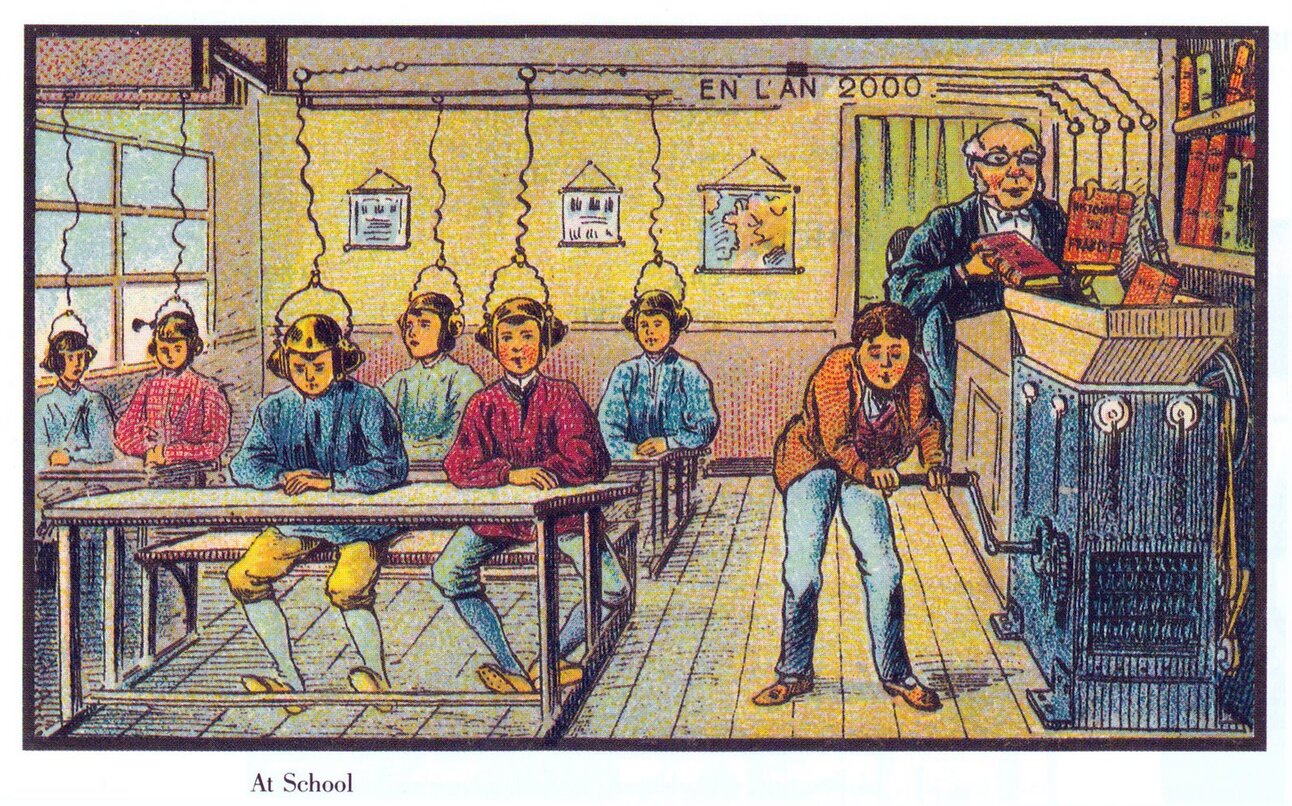
No AI-created images this week, but real ones! Predicting the future has always been a popular human endeavor, regardless of the outlandish or uninformed nature of these predictions. This practice is as ancient as humanity itself and persists to this day, in spite of advances in science and philosophy.
Even in the 1800s, there was a fascination with forecasting future developments. It's not surprising that many of these predictions were far off the mark. The postcards from the "En L’An 2000" series, produced in the late 19th century, not only amuse us but also provide insight into how people of that era envisioned the future.
… and yeah, they didn’t envision a more diverse and equal future 🤷♀️.
EOFUntil Next Time
#MISSIONDEBRIEFGetting Better Together
I value your opinion, so if you have specific advice or anything interesting you’d like to share, please let me know on LinkedIn.
Thank you for reading and see you at the next orbit!
P.S. New here? Get the next issue in your inbox: [ subscribe --free ]