T017 // Space Law and Artificial Intelligence (Part 2)
Plus Beaming solar power from space, every space debris orbiting the Earth, latest investments in the Space Economy, and Alice in Wonderland, but in space
 FIG. 01 · T017 COVERREC ●TRANSMISSION T017
#LAUNCHPADIn today’s edition
G’day Trailblazers!
We’re Trailblazers, the Space Newsletter that navigates the fusion of AI and space exploration, where each update might as well be the first AI-led mission landing on a comet!
- #BEYONDTHEHYPEAI's Role in Shaping the Future of Space
- #STARGRAPHEvery Space Debris Orbiting the Earth
- #PRODUCTIVITY5 Resources to Boost Your Workflows
- #DEALFLOWThe Latest Investments in the Space Economy
- #OUTOFTHISWORLDProject Horizon: The US Military's Moon Base Plan
- #GHOSTINTHEMACHINEAlice in Wonderland, But in Space
#TOGETHERWITHTake your space career from if, to when, to how
 SPONSOR TRANSMISSION · COURSERA
Sponsored · COURSERA
Whether you're looking to start a new career in the space industry or advance in your current field, Coursera Plus offers a wide range of programs in space and high-growth fields such as cybersecurity, data analytics, AI and more.
Archived sponsor message from 18 APR 2024.
#NEWSSpace Economy Bites & Snaps
Space Solar
The European Space Agency's SOLARIS initiative aims to harness solar power in space, offering a sustainable energy solution that could significantly impact Earth's fight against climate change.
Space Economy
Intuitive Machines' Chairman, Kam Ghaffarian, remains highly optimistic about the space economy's potential, crediting advancements in AI for significantly boosting its growth and viability.
- SNAP · 01Space Diplomacy: China initiates space collaboration forum with Latin America, enhancing global cooperation.
- SNAP · 02Space Energy: Former SpaceX, General Motors engineers turn to space-based solar power.
- SNAP · 03Sustainability: New business models emerge focusing on space debris cleanup, promising orbital longevity and better insurance products.
- SNAP · 04Transparency: NASA acknowledges space station debris risks, underscores need for proactive management.
- SNAP · 05Market Expansion: Identifying potential customers critical for the growth of the Low Earth Orbit economy.
#REALLY?Our Solar System Is Mostly Made Of… Our Sun!
The Sun's dominance in the solar system is profound; it holds 99.8% of the system's total mass, with a mass nearly 333,000 times that of Earth.
This immense mass exerts a strong gravitational pull, anchoring planets in their orbits. The Sun is truly massive. One million Earths could fit inside the Sun! Despite its size, the Sun is of average mass compared to other stars, with many being less massive and a few significantly larger. Its gravitational influence may extend up to 125,000 AU, encompassing the furthest known objects in our system. Now, you know. 😅
#MARKETWATCHInvesting in the Universe
| FUND | PRICE | CHANGE |
|---|---|---|
| Procure Space ETF (UFO) | $15.11 | ▼ -1.2% |
| RK Space Exploration and Innovation (ARKX) | $14.02 | ▼ -0.9% |
| S&P Kensho Final Frontiers (ROKT) | $41.93 | ▼ -0.6% |
#BEYONDTHEHYPEThoughts and Opinions
AI's Role in Shaping the Future of Space
Fast forward to the year 2050 – humanoid androids diligently constructing human colonies on distant celestial bodies while autonomous medical robots ensure the well-being of residents. Picture this: welcoming "extra-terrestrial" check-ins at orbiting hotels operated by caring robots. Such scenes might seem straight out of science fiction, but in space exploration, the integration of autonomous systems is fast becoming a reality crucial for our future success.
Yet, we need not look too far into the future to appreciate the significance of sophisticated AI in the space industry. Today, machine learning and deep learning systems are intelligent and capable of acting independently without human intervention. They are increasingly vital in all areas of modern space endeavors.
Take, for instance, the analysis of data collected by satellites. Machine learning systems sift through vast amounts of data, ensuring that only pertinent information is transmitted to operators on th ground. Processing data onboard satellites before transmission has long been a strategic goal, reducing clutter and preserving precious bandwidth.
Looking ahead, AI's role becomes even more pronounced with the proliferation of mega-constellations in Low Earth Orbit (LEO). By 2030, tens of thousands of satellites will orbit Earth, posing heightened collision risks. For satellite operators, handling every potential collision risk poses a daunting challenge. It is not sustainable in the long term. Here, AI will be pivotal in managing space traffic, autonomously avoiding collisions, monitoring and predicting the well-being of satellites, and providing in-orbit servicing. Without AI to lighten the load, maintaining humanity’s orbital infrastructure and preventing orbital accidents would require armies of highly trained and diligent workers, placing a massive burden on the space industry.
However, AI can change this. AI software integrated into space assets not only manages satellite control but also processes data on board. This enables the collection and analysis of crucial data about satellite positioning and the surrounding environment. Utilizing AI, space assets will interpret gathered information to inform task planning, enabling autonomous collision avoidance maneuvers. This data-driven approach will empower space operators to automate several collision avoidance maneuvers, or enable them to intervene swiftly when necessary to prevent incidents in space upon proper notification. These applications are already in advanced development and testing phases, promising a holistic approach to space traffic management in the LEO environment where satellites can coexist seamlessly.
However, alongside these opportunities come critical considerations. Questions surrounding attribution and liability arise, particularly in scenarios where AI systems may be at fault in next-generation space activities. Moreover, commercial interests must grapple with the ethical boundaries of AI programming, guarding against the potential misuse of autonomous systems for militaristic purposes or systems which could invade individual’s privacy.
As we approach this new era, it's imperative to establish clear and practical regulations. The inherent dual-use nature of many space technologies underscores the importance of robust governance frameworks to mitigate risks associated with autonomous systems.
Join us next time as we discuss legal issues related to AI adoption in the space sector and potential regulatory changes.
#TOGETHERWITHElevate Your Space Projects to New Heights with Notion!
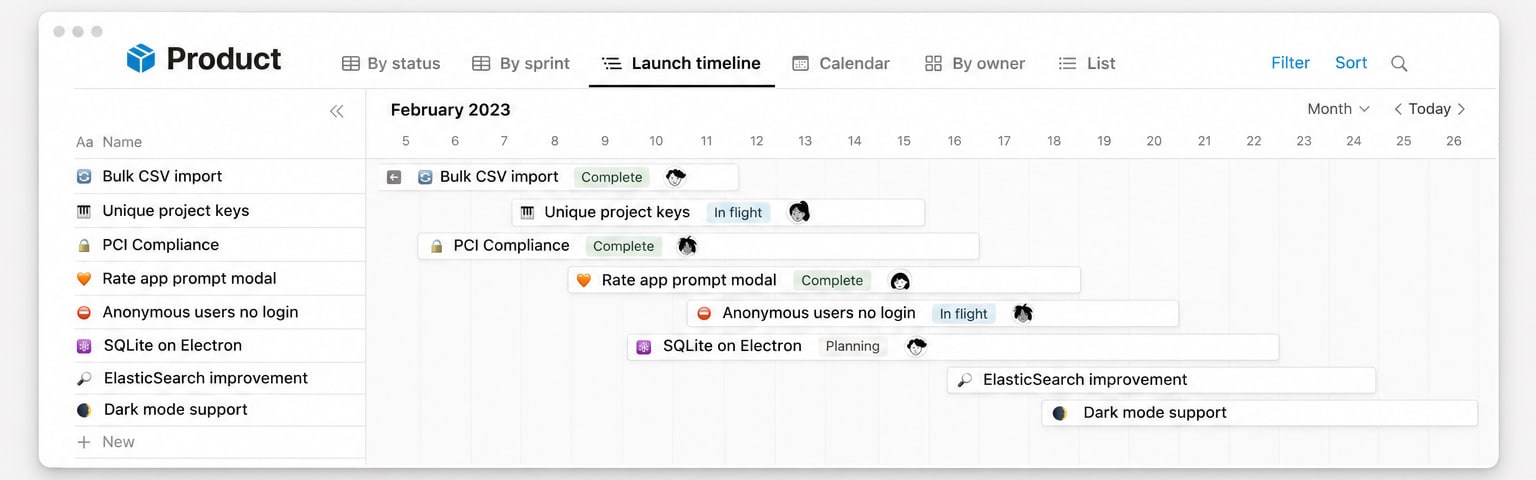 SPONSOR TRANSMISSION · NOTION
Sponsored · NOTION
In the fast-paced space industry, efficient project management isn't just a necessity—it's a game changer. Notion offers a versatile platform that adapts to your diverse professional needs, whether you're an engineer designing the next-generation satellite, a lawyer navigating complex regulatory landscapes, or a marketer telling the story of your space venture. Notion brings all your work into one unified space, facilitating collaboration, tracking progress, and ensuring that your team stays aligned and focused on the mission ahead. Transform how you manage projects, from ideation to launch, with Notion's customizable templates and integrative features.
Archived sponsor message from 18 APR 2024.
#STARGRAPHEvery Space Debris Orbiting the Earth (May 2023)
2007 China conducted an Anti-satellite weapons (ASAT) test that destroyed one of its own weather satellites and created over 3,500 pieces of debris.
2009 a collision between an inactive Russian satellite and an operational US communications satellite created over 2,000 pieces of debris.
Densest band: between the ISS orbit and 2,000 kmA Russian discarded upper rocket stage, Fregat, created around 400 space debris
In this visualization, Preyash Shah leverages tracking data from Space-Track.org, managed by the U.S. Space Force, to illustrate the extent of debris orbiting Earth and pinpoint the primary sources contributing to this space clutter.
#PRODUCTIVITY5 Resources to Boost Your Workflows
- TOOL · 01Reka Core → A new multimodal LLM capable of processing video inputs and advanced web browsing, outperforming others in benchmarks.
- TOOL · 02AI Assistant for Acrobat → Enhance your productivity with this tool that interacts with documents for quick answers and summaries.
- TOOL · 03Notion AIPROMOTED → An AI platform that helps users organize and manage their tasks, projects, and notes. Try it now.
- TOOL · 04The Business, Politics, Policy, & Players of Space ProgramsPROMOTED → Explore funding sources, players, and applications in space exploration.
- TOOL · 05Generative AI for EveryonePROMOTED → Led by AI pioneer Andrew Ng, this course demystifies generative AI, covering its capabilities, limitations, and practical applications. Features hands-on exercises, prompt engineering tips, and insights into its societal and business impacts. Designed to make generative AI accessible to all.
#DEALFLOWThe Latest Investments in the Space Economy
- 01Andreessen Horowitz launches new $7.2B investment funds focusing on emerging technologies, including space.$7.2BINVESTMENT
- 02Satellogic secures $30 million from stablecoin tech company, Tether Investments, to boost operational capabilities.$30 millionINVESTMENT
- 03Aliena raises $5.6 million in Series A funding led by Wavemaker Partners to advance space technology initiatives.$5.6 millionSERIES A
- 04Vyoma secures €5M from European Investment Fund for advanced space surveillance technologies.€5MINVESTMENT
- 05Aerospacelab successfully acquires AMOS to enhance capabilities in advanced space technologies and market expansion.ACQUISITION
- 06Trident IoT, a silicon provider and RF technology company, completes $10M round to enhance IoT development.$10M
- 07Ecoation Innovative Solutions wins $380,000 in Deep Space Food Challenge for modular food production system.$380,000
- 08Dish Network, a provider of satellite TV services carrying a debt exceeding $20 billion, has received a financing proposal from private credit companies totaling over $1 billion.$20 billionDEBT
- 09UK Space Agency invests £1.3M in nuclear power projects for space exploration advancements.£1.3MINVESTMENT
- 10Rolls-Royce awarded £2.9M from UK Space Agency to develop a nuclear reactor for supporting lunar bases, advancing the future of Moon habitation.£2.9M
- 11Arka completes $85 million expansion of Connecticut facility, enhancing smallsat systems and optical coating production capabilities.$85 million
- 12Bright Ascension secures £2.25M to accelerate market launch of HELIX space software products.£2.25MRAISE
- 13Varda Space Industries raises $90 million for scaling microgravity pharmaceutical production.$90 millionRAISE
- 14Blackswan Space secures €760,000 to enhance simulators for space maintenance operations.€760,000RAISE
- 15Loar Holdings files for US IPO, aims to expand aerospace and defense parts manufacturing after acquiring several companies.LISTING
#OUTOFTHISWORLDProject Horizon: The US Military's Moon Base Plan
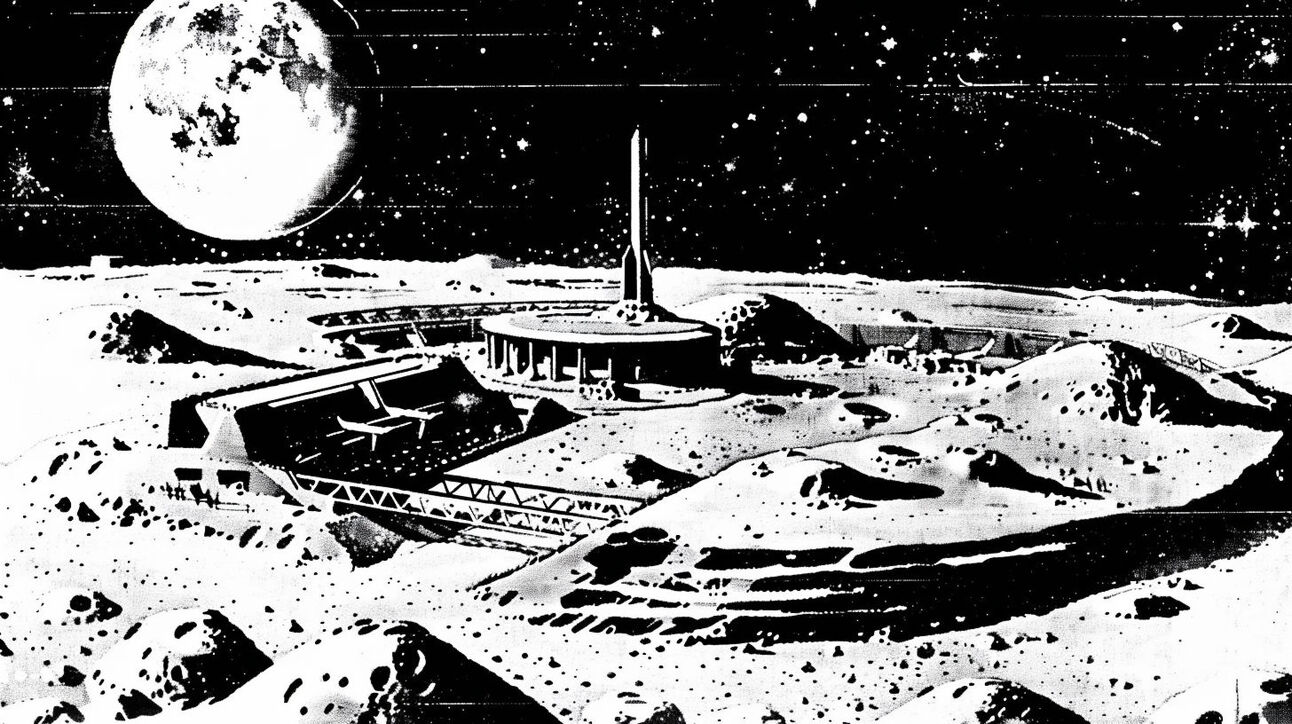
Project Horizon was a classified study conducted by the United States Army in 1959, aimed at assessing the feasibility of constructing a manned military outpost on the Moon. The primary goal was to establish a strategic military advantage in space, with the Moon base serving as a platform for surveillance, communication, and potentially as a launchpad for operations in space or back on Earth.
The ambitious plan outlined the construction of the lunar outpost using prefabricated modules, which would be assembled to create a habitable environment for a crew of 12 soldiers. The base was to be powered by two nuclear reactors and defended with an array of weapons, including nuclear-armed rockets and modified mines. The estimated cost of the project was $6 billion in 1959 dollars, equivalent to about $58 billion today, which was a significant financial undertaking at the time.
The logistics involved in Project Horizon were complex, requiring numerous launches of Saturn rockets to transport 245 tons of cargo to the Moon by 1966. The construction process would involve creating trenches, placing the habitat modules, and covering them with lunar soil to protect against the Moon's harsh environment. The initial plan envisioned the first soldier-astronauts arriving on the Moon in July 1965, with the base expected to be fully operational by late 1966.
Project Horizon was a reflection of the Cold War era's intense competition and the desire to extend military capabilities into space. Although it never progressed beyond the planning stages due to its astronomical costs and the eventual shift of the U.S. space program to civilian oversight under NASA, the project remains a significant historical example of early military interest in space exploration.
The cancellation of Project Horizon by President Dwight D. Eisenhower and the redirection of space exploration efforts to NASA marked a pivotal moment in space history, emphasizing peaceful exploration over military competition. Today, with renewed interest in lunar exploration through programs like Artemis, Project Horizon serves as a reminder of the ambitious plans that once aimed to extend human presence beyond Earth and the ongoing evolution of space exploration objectives.
US Army
US Army
US Army | US Army |
#GHOSTINTHEMACHINEAlice in Wonderland, But in Space
 01
 02
 03
 04
 05
 06
EOFUntil Next Time
#MISSIONDEBRIEFGetting Better Together
I value your opinion, so if you have specific advice or anything interesting you’d like to share, please let me know on LinkedIn.
Thank you for reading and see you at the next orbit!
P.S. New here? Get the next issue in your inbox: [ subscribe --free ]