T027 // The Economics of Satellite Broadband
Plus Underestimating the threat of falling space junk, the complexity of the wireless spectrum, pioneering global lunar collaboration, and a LEGO-inspired Moon Village
 FIG. 01 · T027 COVERREC ●TRANSMISSION T027
#LAUNCHPADIn today’s edition
G’day Trailblazers!
We’re Trailblazers, the Space Newsletter that’s all about connecting the dots—literally. From satellites beaming broadband to the farthest corners of Earth, we’re here to make sure no one misses out on the conversation.
- #BEYONDTHEHYPEThe Economics of Satellite Broadband
- #REALLY?The first communications satellite was “spherical”
- #STARGRAPHThe Breathtaking Complexity of the Wireless Spectrum
- #OUTOFTHISWORLDThe Moon Village Association
- #GHOSTINTHEMACHINELEGO-inspired Moon Village
#NEWSSpace Economy Bites & Snaps
Space Debris
Experts warn that we are underestimating the threat of falling space junk, which increasingly survives re-entry and poses risks to people and property on Earth. This highlights the urgent need for better debris management strategies.
On-Orbit Servicing
Despite advancements making on-orbit servicing more feasible, market adoption remains slow due to high costs, low demand for LEO satellite life extension, and evolving regulatory landscapes. This underscores the complex dynamics of bringing OOS to market.
- SNAP · 01Space Stations: Global collaboration boosts commercial space stations, opening new avenues for space economy growth.
- SNAP · 02Debris Advisory: Philippine Space Agency alerts on Long March 7A launch, emphasizing regional space safety measures.
- SNAP · 03Mars Papers: NASA unveils Moon to Mars plans, detailing steps to advance space economy initiatives.
#REALLY?The first communications satellite was “spherical”
Telstar 1, launched on July 10, 1962, was the world's first active communications satellite.
Developed by Bell Labs for AT&T, this 170-pound, 34.5-inch diameter sphere pioneered global satellite communications. It orbited Earth every 2.5 hours at an altitude of about 3,500 km. Its spherical design offered structural integrity, uniform antenna coverage, and spin-stabilization. Telstar 1 enabled the first transatlantic television transmission and revolutionized global communications. Although operational for only a few months due to radiation damage, it paved the way for future satellites. Later designs shifted to cubical shapes for better thermal management, modularity, and cost-effectiveness. Telstar 1's success captured public imagination and ushered in a new era of instant worldwide communications, influencing popular culture and sparking further advancements in satellite technology.
#MARKETWATCHInvesting in the Universe
| FUND | PRICE | CHANGE |
|---|---|---|
| Procure Space ETF (UFO) | $16.29 | ▲ +2.3% |
| RK Space Exploration and Innovation (ARKX) | $15.08 | ▲ +1.0% |
| S&P Kensho Final Frontiers (ROKT) | $44.86 | ▲ +0.4% |
#BEYONDTHEHYPEThoughts and Opinions
The Economics of Satellite Broadband: a Primer
01Introduction
The satellite broadband era did not start with the launch of Elon Musk’s Starlink constellation in 2021. Satellites have long been a key component in the connectivity ecosystem, with traditional players providing communication services to government agencies, navigation systems, specialised industries and individual customers for many years.
Traditionally these services have been provided using Geostationary Orbit (GEO) satellites orbiting at close to 36,000 km from earth, and capable of delivering larger amounts of capacity to high-traffic areas [1].
Technical progress in the satellite industry has enabled the development of Non-Geostationary Orbit (NGSO) satellites. These smaller and closer-to-earth types of satellites offer new possibilities depending on their orbits. The Low-Earth Orbit (LEO) satellites provide high speed broadband at lower latency compared to GEO satellites which make them more suitable to support modern use cases such as video calls, video streaming, monitoring devices and working with cloud-based applications. Meanwhile, Medium Earth orbit (MEO) satellites operating between GEO and LEO offer a compromise in performance but at significantly less cost as shown in Figure 1.
| GEO | MEO | LEO | |
|---|---|---|---|
| Altitude | 35,800 km | 8,000-20,000 km | 400-2,000 km |
| Satellites to cover the world’s population | 3 | 6-20 | Thousands |
| Capacity per satellite | Up to 1 Tbps | ~100 Gbps | 5-20 Gbps |
| Latency | >500 ms | 100-200 ms | 25-100 ms |
| Typical lifespan | 15 years | 12 years | 5-7 years |
NGSO constellations, especially those in LEO are reshaping the satellite broadband market in many ways: Firstly, the number of satellites launched into orbit has surged over the past decade [3], with close to 10,000 active satellites now in orbit, of which 90% are LEO satellites [4]. This remarkable increase is largely driven by the recent deployment of large LEO constellations such as Starlink [5] and OneWeb.
Concurrently, the market structure has undergone significant changes, particularly following the entry of Starlink and the announcement of Amazon’s Project Kuiper. These developments have intensified competition and innovation within the sector, leading to a dynamic and rapidly evolving market landscape.
Finally, policymakers and regulators are showing greater interest in satellite broadband as a means to bridge the digital divide globally [6]. Whether this is indeed the right technology to do so is a strategic question that each country has to seriously investigate.
02A market with strong potential
From a business perspective, the satellite broadband sector is expected to generate substantial revenue. Morgan Stanley's space team estimates that the Internet and consumer broadband segment alone will account for over half of the projected $1 trillion space industry revenue by 2040, translating to $507 billion [7].
From a socio-economic perspective, the market holds immense promise for fostering digital inclusion, extending connectivity to unserved and underserved areas worldwide. In theory, the potential addressable market [8] includes roughly one third of the global population, or around 2.6 billion people [9], who remain offline. Most of these individuals reside in developing countries where the lack of terrestrial digital infrastructure and Internet access has perpetuated economic disparities and limited access to essential services such as education, healthcare, and financial services [10].
Beyond individual consumers, the market also includes a diverse range of institutional and commercial customers with unique connectivity needs. Government agencies, for instance, require reliable and secure communication channels for public administration, emergency response, and national security operations. Hospitals and healthcare providers need robust broadband access to support telemedicine, patient data management, and remote diagnostics, which are critical for improving healthcare outcomes in remote and rural areas. Schools and educational institutions represent another significant segment, as they seek to provide digital learning opportunities and bridge the educational gap for students in underserved regions.
Additionally, businesses operating in remote locations – such as mining, oil and gas, agriculture, and maritime industries – depend on satellite broadband for operational efficiency, real-time data transmission, and connectivity to global supply chains.
These diverse customer segments highlight the multifaceted demand for satellite broadband services, each with distinct requirements and challenges. Addressing these needs effectively requires tailored solutions and innovative business models that can cater to the varying levels of affordability, data consumption, and reliability demanded by different users.
03A dynamic competitive landscape
Although Space X’s Starlink and Amazon’s Kuiper are getting most of the spotlight, the satellite broadband market includes several other global players, many of whom have long-standing experience and established presence in the industry. Figure 2 below shows an overview of key satellite market players.
Companies in this market have adopted diverse strategies regarding the types of satellites they deploy. While some focus exclusively on LEO or GEO constellations, others embrace a multi-orbit approach, combining GEO, MEO and LEO satellites. These diverse strategies reflect different market positioning and target customer segments, though there are overlaps that drive competition.
| Operator | Started | Satellites (planned) | Customer segments |
|---|---|---|---|
| Starlink (US) | 2018 | LEO 5,950 (30,000) | Residential, businesses, telcos |
| Viasat–Inmarsat (US) | 2011 / 2005 | LEO (175)GEO 17 (3) | Residential, businesses, specialised industries, telcos |
| SES–Intelsat (EU) | 1964 / 1985 | LEO 51 (7)MEO 26GEO 26 | Businesses, specialised industries, telcos, broadcasters |
| Eutelsat–OneWeb (EU) | 1977 / 2012 | LEO 600GEO 35 | Residential, businesses, broadcasters, specialised industries |
| Kuiper (US) | 2018 (service from Q4 2024) | LEO (3,226) | Residential, businesses, telcos |
| Avanti (UK) | 2002 | GEO 4 | Businesses, telcos, specialised industries |
| Telesat (Canada) | 1969 | LEO 198GEO 14 | Broadcasters, telcos, specialised industries |
The residential market segment is presently dominated by Starlink whose entry has had a strong impact on the whole market. Firstly, it has spurred a growing appetite for competition from Amazon that started research and development on its project Kuiper the same year [12]. Six years later, Kuiper is not yet operational although full scale deployment was scheduled for the first half of 2024 and early customer pilots are expected for the second half of the year [13]. While Starlink is currently in a market leader position, we expect significant competitive pressure from Kuiper in the upcoming years.
Starlink’s market entry has also driven consolidation among established players as evidenced by four major mergers and acquisitions in the satellite market in the past two years alone: SES-Intelsat (Apr 2024), Eutelsat-OneWeb (September 2023), Viasat-Inmarsat (May 2023) and EchoStar-Dish Network (December 2023). These consolidations are strategic, aimed at enhancing synergies, expanding service portfolios, and achieving deeper market penetration. Most importantly they reflect an industry bracing itself for the intensified competition and technological innovation spearheaded by Starlink and potentially the imminent market entry of Kuiper.
Starlink’s business model leverages significant vertical integration which seems to play a key role in its success. Unlike any other player, Starlink benefits from SpaceX’s ability to launch its satellites, drastically reducing dependency on external launch providers and lowering operational costs through reusable rocket technology [14]. This integration has allowed Starlink to achieve rapid deployment and cost efficiency, setting a formidable benchmark in the industry as evidenced by the impressive customer growth [15] reported by the company (Figure 3).
A key question remains though. How does the evolution of the satellite broadband market impact the telecommunications industry? While some appear concerned by a potential competitive pressure on terrestrial communications services providers (CSPs), this has yet to materialise. In urban and densely populated areas, current satellite broadband offerings are not (yet) able to deliver a fibre-like performance or a 5G-like latency. Besides prices do not offer any incentive to switch from a terrestrial solution to a satellite service, particularly in countries where internet access is relatively cheaper.
In fact, there seems to be more cooperation than competition as evidenced by the growing cases of collaboration and partnerships around the world: In Australia for example, Telstra announced that it is moving its remote mobile base stations to OneWeb’s LEO network. In the UAE, Etisalat and Eutelsat agreed to use Eutelsat’s network to extend the operator’s 5G coverage to areas currently unreachable by terrestrial connectivity [17].
04An evolving cost structure
Understanding the cost structure of satellite operators requires an understanding of the basic satellite network architecture (see Figure 4). This architecture includes three main components representing the key cost drivers [18], each requiring significant capital expenditure (CapEx).
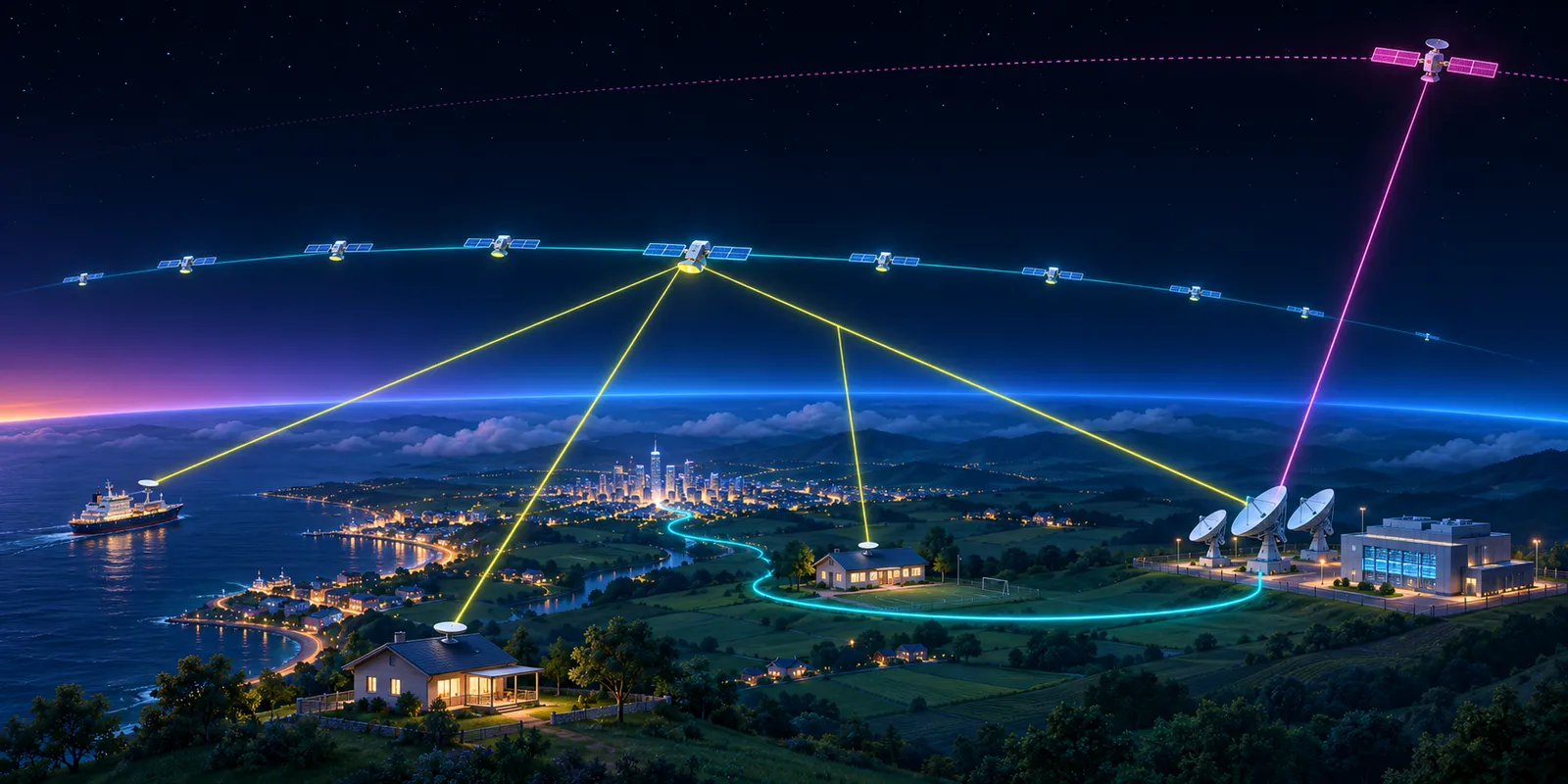 Geostationary one big satellite, ~36,000 km upLEO satellites close in, in their thousandsGateway and data centre, fibre to the cityUser terminals homes, schools, ships
Satellites in orbit serve as the backbone of the satellite network, relaying data traffic between gateway antennas on the ground and end-users. The production and deployment costs associated with satellites are substantial and influenced by various factors such as design complexity, manufacturing processes, and launch expenses. While exact figures are hard to find, estimates suggest that a single LEO satellite costs $500,000 to $1 million. By comparison, GEO satellites cost $100 to 400 million [19]. While significantly more expensive, GEO satellites typically have a longer lifespan of 15+ years compared to the approximately 5-year lifespan of LEO satellites. This means that unlike GEO operators, LEO operators must replace their satellite every few years. In addition, LEO operators intend to deploy thousands of satellites which means that the scale of production is a significant cost factor. By producing satellites in large quantities, economies of scale can be achieved, resulting in reduced manufacturing costs per unit.
While previously the cost of launching a satellite was restricted to well-funded government agencies and a few large companies, technological advancements and increased competition have led to a significant cost reduction [20]. For example, the average launch cost to low earth orbit was about $65,400/kg in 1981 and only $1,500/kg in 2018. This significant reduction is due to innovations such as reusable rocket technology, pioneered by companies like SpaceX.
Ground infrastructure [22] includes gateway antennas that communicate with satellites and user terminals. These ground stations are connected through fibre optics and are often located close to data centres to facilitate connectivity. The cost of establishing and maintaining ground infrastructure is significant, as it involves the installation of sophisticated equipment and infrastructure to ensure seamless communication between satellites and end-users.
User terminals (CPEs) usually include a small dish that sits outside the user’s home or office and an indoor router. This represents a key cost driver for a satellite operator. For example, a Starlink CPE’s initial cost was around $3,000 [23] although the company has announced that they were able to reduce this by 50%. Reducing the manufacturing cost of CPE will undoubtedly play a key role in the adoption of the technology by customers as this has a direct impact on affordability. This also should represent a key competitive advantage as evidenced by Kuiper’s ambition to design a customer terminal that costs less than $500 to build. [24]
05Key policy and regulatory issues
The recent changes in the satellite broadband market have raised new policy and regulatory issues spanning a wide range of topics including the following:
Licensing. All satellite communication systems require licensing and authorisation from both national and international authorities. The principles of regulating space activities are described in the UN Outer Space Treaty. According to the Treaty, each state is internationally responsible and liable for its space activities. This covers activities carried out by non-governmental entities as well. In other words, each state must authorise and supervise the space activities of its non-governmental entities, while the UN must be informed by each state regarding the orbital parameters and basic function of space objects launched by that state. Satellite broadband operators need to navigate international and country-specific regulatory practices and licensing rules in order to launch their services.
Spectrum. Spectrum is a rare and valuable resource, essential for satellite communications. Effective spectrum management is crucial to ensuring that satellite broadband services can coexist with other wireless communications systems without causing interference. The significant increase in the number of satellites and the expansion of satellite services have increased the need for more spectrum, creating more competition between different spectrum users and even leading to the first satellites spectrum auctions [25]. Policymakers must navigate these competing interests and develop strategies for efficient spectrum allocation and sharing. This involves international coordination through bodies like the ITU to harmonize spectrum use globally, protect existing services, and support the growth of new satellite broadband technologies.
Space sustainability. As the number of satellites in orbit continues to grow, space sustainability has emerged as a critical regulatory concern. It refers to the ability to maintain the long-term usability of the space environment. This includes addressing issues such as space debris, satellite collisions, and the long-term health of the orbital environment. With thousands of satellites being launched, particularly in LEO, the risk of collisions and the creation of space debris has increased significantly. Regulators and industry stakeholders must collaborate to develop and enforce policies that promote responsible behaviour in space. This includes guidelines for satellite design, end-of-life disposal plans, and active debris removal initiatives. In this domain as well, international cooperation is essential to establish norms and practices that can mitigate the risks of space debris and ensure the safe and sustainable use of outer space for future generations.
06Conclusion
Despite significant advancements, the satellite broadband market remains in its nascent stages and faces several critical challenges. Affordability continues to be a major hurdle, especially in developing regions where the demand for connectivity is the greatest. Achieving ubiquitous connectivity through satellite broadband is still a distant goal. Current services have yet to reach mass adoption, hindered by high costs and accessibility issues.
Moreover, the profitability of satellite broadband ventures remains uncertain. Major players like Starlink are still striving to achieve sustainable financial performance, indicating that the market's economic viability is not yet assured. Additionally, the potential entry of Chinese companies into the satellite broadband market introduces further complexity to the competitive landscape, raising questions about future market dynamics and geopolitical implications.
07About Plum
We are a leading independent consulting firm, focused on the telecommunications, media, technology, and adjacent sectors.
Plum has a significant experience advising global players in the satellite sector, including satellite operators, industry associations and regulators. We offer rigorous analysis to address challenges and opportunities across strategy, policy, technology and regulatory domains.
For more information contact Plum at:
[ℹ️] Footnotes: Please refer to the PDF paper at this link for the footnote’s links and references.
#TOGETHERWITHElevate Your Space Projects to New Heights with Notion!
 SPONSOR TRANSMISSION · NOTION
Sponsored · NOTION
In the fast-paced space industry, efficient project management isn't just a necessity—it's a game changer. Notion offers a versatile platform that adapts to your diverse professional needs, whether you're an engineer designing the next-generation satellite, a lawyer navigating complex regulatory landscapes, or a marketer telling the story of your space venture. Notion brings all your work into one unified space, facilitating collaboration, tracking progress, and ensuring that your team stays aligned and focused on the mission ahead. Transform how you manage projects, from ideation to launch, with Notion's customizable templates and integrative features.
Archived sponsor message from 03 JUL 2024.
#STARGRAPHThe Breathtaking Complexity of the Wireless Spectrum
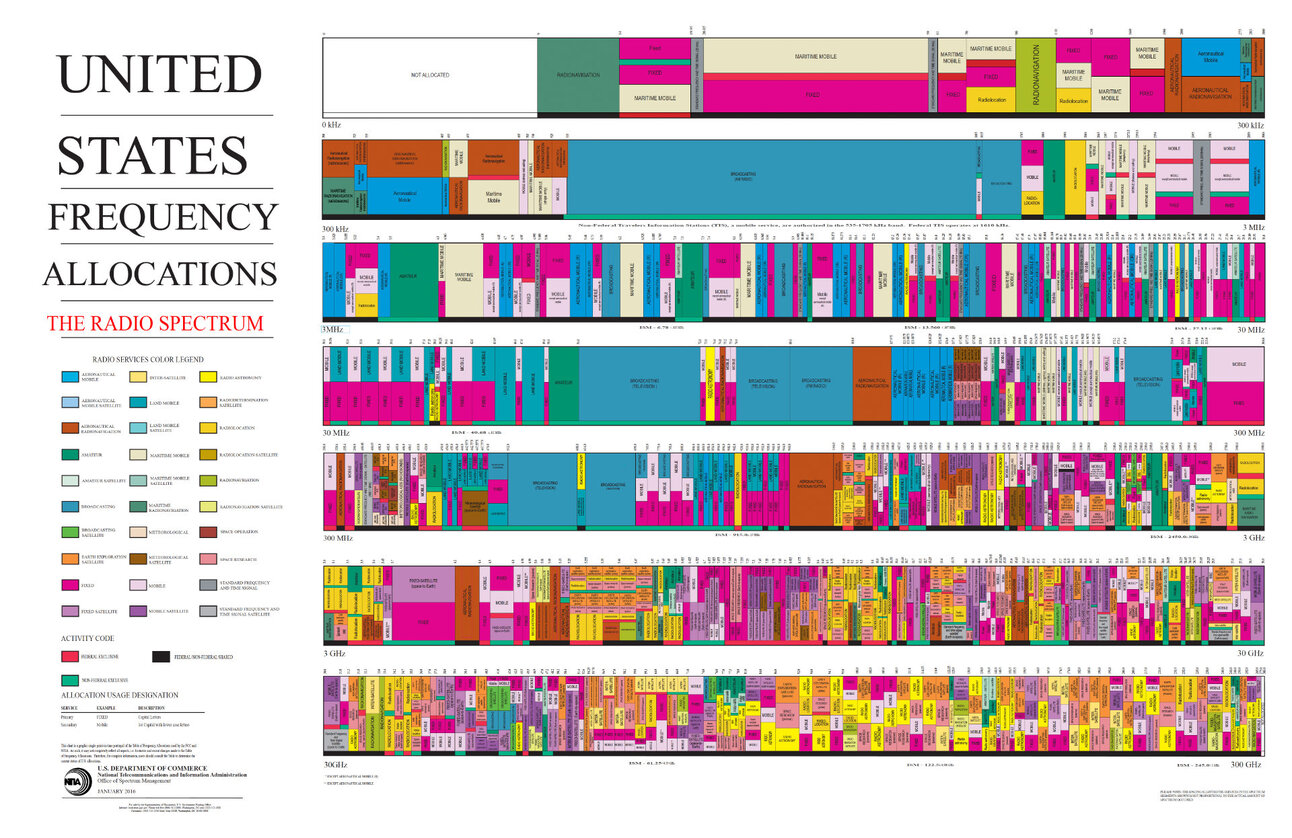
This chart shows the complex role of radio frequencies in various communications and technologies, from TV and radio broadcasting to space exploration and satellite communications. The spectrum, ranging from 3Hz to 3,000GHz, is meticulously allocated for different uses, showing how integral and contested these frequencies are, especially with the continuing rise of mobile data and IoT devices. Recent updates show U.S. efforts to balance public and private spectrum needs, prioritize 5G spectrum, and push for international harmonization to ensure competitive advantages and economic benefits.
#OUTOFTHISWORLDThe Moon Village Association: Pioneering Global Lunar Collaboration

The Moon Village Association (MVA) is shaping up to be another piece of the global puzzle of lunar ambition. Founded in 2017 in Vienna, Austria, this non-governmental organization is slowly-but-surely becoming the go-to forum for international cooperation in lunar exploration and development. The MVA's mission? To unite a diverse array of stakeholders - from government space agencies and commercial powerhouses to academic institutions and the general public - all in pursuit of a sustainable human presence on the Moon.
At its core, the MVA operates as a neutral platform, ensuring that the Moon Village concept remains a truly global endeavor, free from domination by any single entity or nation. The association's objectives are as ambitious as they are important: solidifying a collective vision for lunar habitation, enabling worldwide collaboration, and drumming up public enthusiasm for the potential benefits of lunar development.
To achieve these lofty goals, the MVA is pulling out all the stops. They're engaging financial experts to secure funding for lunar ventures, promoting innovative approaches to international space mission design, and working tirelessly to capture the public's imagination with the Moon Village concept. Through a series of conferences, workshops, and specialized working groups, the MVA facilitates dialogue and cooperation among its diverse membership.
But the MVA isn't just about talk. The association is actively conducting studies, research, and modeling to explore the long-term possibilities of lunar development. These efforts are providing invaluable insights to the global space community, potentially shaping the trajectory of humanity's extraterrestrial future.
The Moon Village Association's role in shaping lunar exploration and utilization cannot be overstated. By championing international cooperation, the MVA is helping to streamline costs and accelerate progress in lunar activities. Their emphasis on sustainable development ensures that our forays into space are responsible and forward-thinking, considering the long-term implications of human presence on the Moon.
Through its various forums and working groups, the MVA is pushing for the advancement of cutting-edge technologies for lunar missions and habitation. This push for innovation is driving progress in space exploration at an unprecedented rate.
Perhaps most importantly, the MVA is bringing space down to Earth. By raising public awareness and stoking interest in lunar exploration, the association is building crucial support for space programs and inspiring the next generation of scientists and explorers.
As a representative of civil society and the international space community, the MVA is positioning itself as a key player in decision-making processes related to lunar exploration and governance. This influence could shape policies that will define humanity's future in space.
The Moon Village Association's efforts to coordinate and advance lunar exploration initiatives could lead to significant scientific discoveries, technological innovations, and new economic opportunities, ultimately impacting our understanding of the universe and our place within it.
#GHOSTINTHEMACHINELEGO-inspired Moon Village
 01
EOFUntil Next Time
#MISSIONDEBRIEFGetting Better Together
I value your opinion, so if you have specific advice or anything interesting you’d like to share, please let me know on LinkedIn.
Thank you for reading and see you at the next orbit!
P.S. New here? Get the next issue in your inbox: [ subscribe --free ]