T026 // Space Readiness Levels
Plus The ongoing feud between Elon Musk and Jeff Bezos, the latest developments in space governance, regulations & policy, and AI’s take on modern aircrafts
 FIG. 01 · T026 COVERREC ●TRANSMISSION T026
#LAUNCHPADIn today’s edition
G’day Trailblazers!
We’re Trailblazers, the Space Newsletter that's climbing the ladder of Space Readiness Levels faster than you can say "Houston, we have liftoff!
- #BEYONDTHEHYPESpace Readiness Levels: Enhancing Business Entry into the Space Economy
- #STARGRAPHSetting Up a SRL Certification System
- #SPACEREGSDevelopments in space governance, regulations & policy
- #INTHELOOPTech Trends on Earth Shaping Our Future in Space
- #GHOSTINTHEMACHINEModern Aircrafts Imagined by…
#TOGETHERWITHAI TOOL REPORT
 SPONSOR TRANSMISSION · AI TOOL REPORT
Sponsored · AI TOOL REPORT
AI Tool Report is one of the fastest-growing and most respected newsletters in the world, with over 550,000 readers from companies like OpenAI, Nvidia, Meta, Microsoft, and more.
Archived sponsor message from 27 JUN 2024.
#NEWSSpace Economy Bites & Snaps
Musk vs. Bezos
The ongoing feud between Elon Musk and Jeff Bezos heats up as Musk criticizes Bezos' Blue Origin over delays, highlighting the intense rivalry and competition in the private spaceflight industry.
Reusable Rockets
Small launcher startups MaiaSpace, PLD, and RFA assert there is no viable business case for reusable small launch vehicles, challenging a major trend in space industry innovation and sustainability efforts.
- SNAP · 01Space Cyberattacks: Cal Poly's space cybersecurity report reveals key strategies for protecting space assets.
- SNAP · 02ISS End: NASA and SpaceX to decommission and destroy the International Space Station post-2030.
- SNAP · 03Sour Grapes: European Space Director struggles with SpaceX Starship's success, signaling shift in space dominance.
#REALLY?Moving from non-space industry to space industry
For those considering a career change into the space industry, many skills from other sectors are highly transferable.
Problem-solving, data analysis, project management, and communication skills developed in fields like engineering, IT, finance or consulting can be valuable assets. The space sector needs diverse talents beyond just technical roles, including business development, legal expertise, and marketing. Key transferable skills include adaptability, teamwork, critical thinking, and the ability to work in fast-paced environments. While some specialized knowledge may be required, many space companies are open to candidates from other industries who demonstrate passion, relevant transferable skills, and a willingness to learn. Networking, staying informed on industry trends, and potentially pursuing additional training or certifications can help facilitate the transition.
#MARKETWATCHInvesting in the Universe
| FUND | PRICE | CHANGE |
|---|---|---|
| Procure Space ETF (UFO) | $15.76 | ▲ +1.4% |
| RK Space Exploration and Innovation (ARKX) | $14.90 | ▲ +0.4% |
| S&P Kensho Final Frontiers (ROKT) | $44.54 | ▲ +0.1% |
#BEYONDTHEHYPEThoughts and Opinions
Space Readiness Levels: Enhancing Business Entry into the Space Economy
01Introduction to Space Readiness Levels (SRLs)
Space Readiness Levels (SRLs) are a new metric system designed to help companies evaluate and improve their preparedness for entering the expanding space market. Similar to Technology Readiness Levels (TRLs), SRLs provide a clear and structured roadmap for businesses. This ensures a smoother transition into the space sector by systematically assessing and enhancing their capabilities.
02Purpose of SRLs
SRLs aim to support both traditional companies and new entrants in the space economy. They offer a systematic assessment of a company’s readiness to capitalize on space-related economic opportunities. As the space sector grows, it presents lucrative prospects for various industries. However, many traditional companies see this as a long-term goal and are hesitant to commit resources without a clear path. SRLs address this by providing a detailed readiness framework, encouraging investment and strategic planning.
03Measuring Readiness with SRLs
SRLs measure a company’s maturity and preparedness to participate in the space economy. The system includes a coding structure aligned with the European Space Agency (ESA) technology tree definitions, ensuring consistency and familiarity. This classification assesses and demonstrates a company’s progress toward entering the space market. Currently, the SRL system comprises seven levels:
L1 - Basic Knowledge of the Space Sector
L2 - Concept formulated for use in the Space Sector
L3 - Component validated in the relevant environment of the Space Sector
L4 - System/Subsystem/product model in relevant environment (ground or space)
L5 - System/ product prototype demonstration in a space environment
L6 - Actual system/product completed and flight or space-qualified
L7 - Actual system/product “flight-proven” or used in Space through successful mission in Space
The SRL coding formula is:
SRL = LX+TDs+TSs+TGS+(α)+(β)
Where LX is the SRL level, and TD, TS, and TG are defined according to the ESA technology tree classification. Optional codes (α and β) identify the financial resources invested in space activity and its percentage as part of overall R&D activities.
Typical structure of the certificate delivered to the company/organization at the end of the SRLs certification process
04Benefits of SRLs
SRLs provide several benefits to companies entering the space market:
Guidance for New Entrants: SRLs offer a clear roadmap for companies unfamiliar with the space industry, outlining specific steps and milestones needed to achieve market entry. This reduces uncertainty and provides a structured approach to business development.
Investment Attraction: Achieving higher SRLs allows companies to showcase their readiness and commitment to the space market. This certification can be presented to financial analysts, investors, venture capital firms, and space agencies, building confidence among investors and facilitating funding.
Standardized Assessment: The SRL system offers a standardized method to evaluate and compare the readiness of different companies. This promotes transparency and consistency, making it easier for stakeholders to assess various businesses' capabilities.
Encouraging Traditional Companies: Many traditional companies hesitate to enter the space market due to perceived risks and long-term returns. SRLs bridge this gap by offering a clear, achievable pathway, encouraging these companies to explore space-related opportunities.
Certification and Recognition: The potential development of an international SRLs certificate recognition system could enhance the SRL framework's credibility and impact. Certified agencies delivering SRL certificates would gain global recognition, fostering trust and collaboration within the space industry.
05Distinguishing SRLs from Aerospace Certification
Aerospace Certification involves a rigorous process ensuring products, systems, and operations meet strict safety, quality, and performance standards. Essential for activities like aircraft manufacturing and space missions, achieving aerospace certification requires significant time, resources, and extensive testing, which can be a barrier for smaller companies and newcomers.
Space Readiness Levels (SRLs), on the other hand, are designed as a more accessible and practical assessment tool for companies looking to enter the space market. While aerospace certification focuses on product and operational compliance, SRLs evaluate a company’s overall readiness to engage in the space economy. They measure factors like technological maturity, business readiness, and strategic alignment, providing a holistic view of a company’s preparedness.
06Practical Advantages of SRLs for Newcomers
Simplified Evaluation Process: SRLs offer a streamlined assessment that is less resource-intensive than traditional aerospace certification. This allows companies to quickly gauge their readiness and identify areas for improvement.
Focused on Business Readiness: Unlike aerospace certification, which emphasizes technical and operational compliance, SRLs focus on a company’s overall readiness to enter the space market. This includes evaluating business strategies, market positioning, and readiness to capitalize on space-related opportunities.
Encouraging Incremental Progress: SRLs help companies, especially smaller ones, make incremental progress toward entering the space industry. Companies can achieve higher SRLs by meeting specific milestones, providing a clear pathway for gradual improvement.
Flexibility for Diverse Companies: The SRL system is adaptable to various types of businesses, from startups to established firms, offering a versatile framework that accommodates different sizes and industries. This flexibility makes SRLs particularly valuable for newcomers who may lack the resources for traditional aerospace certification.
Immediate Market Insights: SRLs provide immediate, actionable insights into a company’s readiness for the space market, enabling quicker decision-making and strategic planning. Companies can use SRL assessments to attract investors and partners by demonstrating their preparedness.
Encouraging Broader Participation: By lowering the entry barriers, SRLs encourage a wider range of companies to explore opportunities in the space sector. This inclusivity fosters innovation and expands the space economy, allowing more players to contribute and benefit from space-related activities.
07Activating Innovation and Spaceforming with SRLs
The SRL system promotes the concept of "Spaceforming," which involves transforming terrestrial industries to support and advance space exploration and colonization. By leveraging their existing knowledge and resources, companies can develop new space-related projects that contribute to making humanity a multiplanetary species. This process is crucial for the future of space exploration as it fosters the development of technologies and infrastructures needed for sustained human presence in space.
08Conclusion
The introduction of Space Readiness Levels (SRLs) is a crucial initiative to support and accelerate the growth of the space economy. By offering a structured, standardized assessment of a company’s readiness to enter the space market, SRLs help reduce uncertainty, attract investment, and encourage traditional businesses to venture into space-related opportunities. As the space industry evolves, SRLs will play a key role in guiding newcomers and fostering a dynamic, inclusive space economy.
While aerospace certification remains essential for ensuring safety and compliance in high-risk operations, the SRL system provides a more practical, accessible, and business-oriented approach for newcomers. By offering a clear, incremental pathway to market entry, SRLs empower smaller companies and startups to participate in the space economy, driving innovation and growth in this frontier.
The SRL system is not just a readiness assessment tool; it catalyzes new projects and fosters innovation within the space sector. By encouraging companies to leverage their existing capabilities and initiate space-related projects, SRLs facilitate the spaceforming process of terrestrial industries. This transformation is vital for achieving the goal of making humanity a multiplanetary species, driving the development of the necessary technologies and infrastructures for life beyond Earth. Through SRLs, the space industry can harness the full potential of traditional companies, accelerating space technology application on Earth and fostering a dynamic, inclusive space economy.
#TOGETHERWITHElevate Your Company's Visibility!
 SPONSOR TRANSMISSION · NOUN2LEARN
Sponsored · NOUN2LEARN
Stand Out From The Pack By Sharing Your Company's Mission In A Distinctive Way. 🚀
Archived sponsor message from 27 JUN 2024.
#STARGRAPHSetting Up a SRL Certification System
- 01
Selection of a set of companies target of the pilot test
- 02
A set of possible projects are suggested by the Steering Committee to the set of companies target of the pilot test
- 03
The projects are defined and assigned to the target set of companies. The Steering Committee acts as supervisor of the execution of the projects
- 04
Once the projects are executed, the SRL certificates are delivered to the target companies by the Steering Committee
Certificates issued - 05
The results of the projects are advertised on media and scientific publications
- 06
The feedback of the pilot test is analyzed by the Steering Committee and Companies Association to improve the SRL system and apply it in a next step
The Space Readiness Levels (SRLs) not only serve as a metric to gauge a company's maturity and readiness to penetrate the Space Sector but also stand as a testament to the financial and technological efforts invested by the company to carve its niche in the space economy. The SRLs, once determined, can be officially declared and utilized through a certification model, providing a tangible and verifiable means for companies to showcase their commitment and advancements in the space sector to various stakeholders, including financial analysts, investors, and venture capital firms.
#SPACEREGSDevelopments in space governance, regulations & policy
Space Mining Regulation
Chris Tolton argues that additional UN regulations on space mining are unnecessary, asserting that existing frameworks like the Outer Space Treaty and the Artemis Accords suffice. He believes that new regulations could create uncertainty and stifle innovation, suggesting that current agreements already provide a solid foundation for industry growth and investment.
NOAA Licensing
NOAA has approved Australia’s HEO's Holmes camera, marking the first standalone remote sensing payload to receive such a license. This approval represents a significant step towards easing restrictions on non-Earth imaging, paving the way for more commercial operations in areas like in-orbit satellite repair and debris removal. HEO's Tier 1 license is expected to launch on Sidus Space’s LizzieSat 2 in October. This milestone reflects a broader regulatory shift towards supporting innovative space technologies.
Italy's Space Framework Law
Italy has introduced its first comprehensive framework law for the space sector, requiring both national and foreign operators to obtain authorization for space activities and secure up to €100 million in insurance coverage per incident. The Italian Space Agency (ASI) will oversee compliance, with the authority to revoke non-compliant licenses. The law also establishes a National Plan for the Space Economy and a Space Economy Fund to support market innovation through public and private investments.
Space Debris Claims
NASA faces an $80,000 claim after a 700-gram piece of space debris hit a family's home in Naples, Florida. The debris, identified as part of a cargo pallet of used batteries from the ISS, punctured the roof, causing significant damage. The incident highlights the growing issue of space debris and its potential impact on Earth. The affected family seeks compensation for the stress and damages caused. NASA has six months to respond to the claim.
Space Crisis Risks
A RAND Corporation study warns that China's "worst-case thinking" and risk-tolerant approach to space security could heighten the risk of unintended military escalation. The report highlights China's reluctance to engage in crisis communications with the U.S., viewing such efforts as attempts to control its behavior. This mindset, coupled with deep suspicions of U.S. intentions, may lead to increased instability in space relations.
Interoperability in Space Comms
To future-proof space communications, scaling interoperability is essential. Standardized protocols across different satellite networks can enhance efficiency, reduce costs, and foster innovation. This approach would not only improves connectivity but also ensures robust, resilient space communications infrastructure. Collaboration among industry stakeholders is crucial to developing and adopting these standards, paving the way for a more integrated and accessible space communications landscape.
#INTHELOOPTech Trends on Earth Shaping Our Future in Space
Climate Paradox
Efforts to curb air pollution inadvertently accelerate global warming as fewer pollutants lead to less sunlight reflection, revealing the complex dynamics of climate change mitigation.
Geoengineering Risks
Efforts to cool regions with geoengineering, like marine cloud brightening, may inadvertently raise temperatures in other parts of the world, highlighting the complex and interconnected effects of climate interventions.
Nuclear Energy Bill
Congress passes a comprehensive nuclear energy bill, now awaiting President Biden's signature, aiming to boost nuclear power development and enhance energy security in the U.S.
AI Chip Expansion
TSMC plans to triple wafer sizes to accommodate growing AI chip demands, shifting to rectangular substrates for better efficiency and less waste, supporting advanced chip technologies for Nvidia, AMD, Amazon, and Google.
#TOGETHERWITHElevate Your Space Projects to New Heights with Notion!
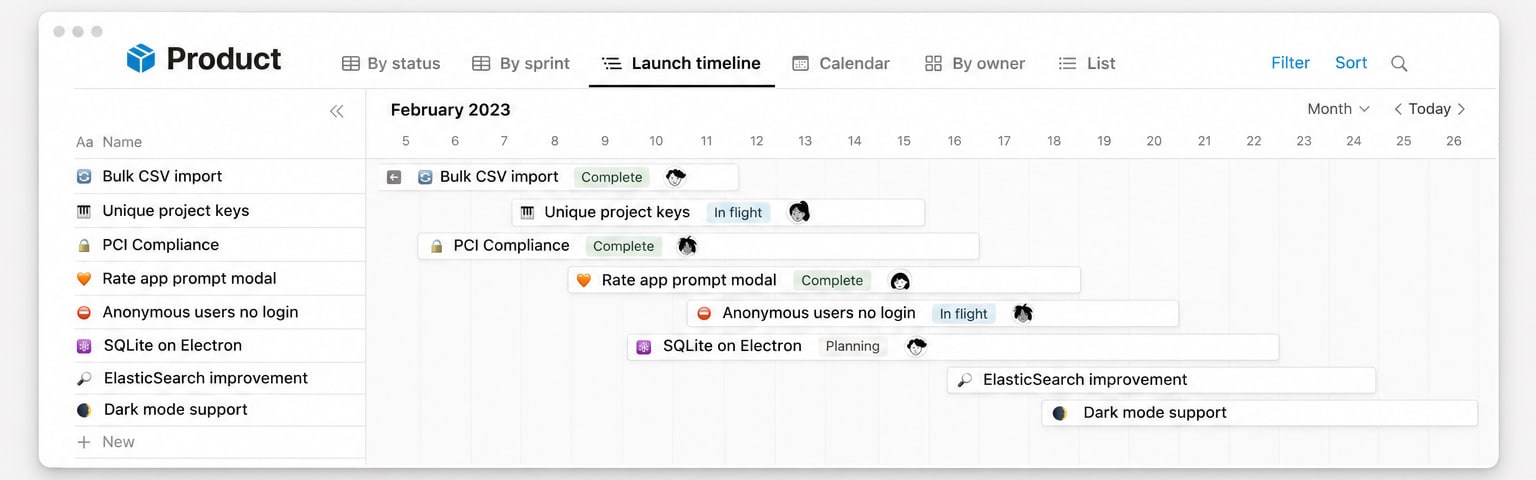 SPONSOR TRANSMISSION · NOTION
Sponsored · NOTION
In the fast-paced space industry, efficient project management isn't just a necessity—it's a game changer. Notion offers a versatile platform that adapts to your diverse professional needs, whether you're an engineer designing the next-generation satellite, a lawyer navigating complex regulatory landscapes, or a marketer telling the story of your space venture. Notion brings all your work into one unified space, facilitating collaboration, tracking progress, and ensuring that your team stays aligned and focused on the mission ahead. Transform how you manage projects, from ideation to launch, with Notion's customizable templates and integrative features.
Archived sponsor message from 27 JUN 2024.
#GHOSTINTHEMACHINEModern Aircrafts Imagined by…
 01
 02
 03
 04
EOFUntil Next Time
#MISSIONDEBRIEFGetting Better Together
I value your opinion, so if you have specific advice or anything interesting you’d like to share, please let me know on LinkedIn.
Thank you for reading and see you at the next orbit!
P.S. New here? Get the next issue in your inbox: [ subscribe --free ]