T022 // Space Law and Artificial Intelligence (Part 3)
Plus Building solar farms in space, the latest developments in space governance, regulations & policy, and Magritte-inspired space art with AI
 FIG. 01 · T022 COVERREC ●TRANSMISSION T022
#LAUNCHPADIn today’s edition
G’day Trailblazers!
We’re Trailblazers, the Space Newsletter that navigates the uncharted territory of AI and international space law with the precision of a satellite and the curiosity of a rover.
- #BEYONDTHEHYPEThe Uncharted Territory of AI and International Space Law
- #STARGRAPHTop Energy Priorities of Major Countries
- #PRODUCTIVITY5 Resources to Boost Your Workflows
- #SPACEREGSDevelopments in space governance, regulations & policy
- #INTHELOOPTech Trends on Earth Shaping Our Future in Space
- #GHOSTINTHEMACHINEEmpire of Stars, Magritte-inspired art
#TOGETHERWITHManage Any Space Project, Your Way
 SPONSOR TRANSMISSION · monday.com
Sponsored · monday.com
Elevate your space projects with monday.com! 🚀
Archived sponsor message from 30 MAY 2024.
#NEWSSpace Economy Bites & Snaps
Space-based Solar
Michigan startup Virtus Solis aims to revolutionize clean energy by building solar farms in space, potentially doubling the efficiency of ground-based solar plants. This innovative approach could offer a reliable and scalable solution for global clean energy needs.
Saudi Fund Investment
Saudi Arabia's Public Investment Fund (PIF) launches Neo Space Group to develop and enhance the kingdom's satellite and space industry, marking a significant step in diversifying its economy beyond oil reliance.
- SNAP · 01Satcom: Broadband still relevant and lucrative in space economy, says AVIA.
- SNAP · 02Starliner: Boeing will launch spacecraft with a leak, raising concerns for space economy safety.
- SNAP · 03Nuclear: NASA funds breakthrough rocket, revolutionizing propulsion in the space economy.
- SNAP · 04Valuation: SpaceX could become the most valuable company by 2026, reshaping the space economy.
- SNAP · 05Gravity: Parabolic flight experiments test boiling in partial gravity, aiding future off-world colonists.
#REALLY?What Is Space-Based Solar Power?
Space-based solar power involves collecting solar energy in space and beaming it to Earth.
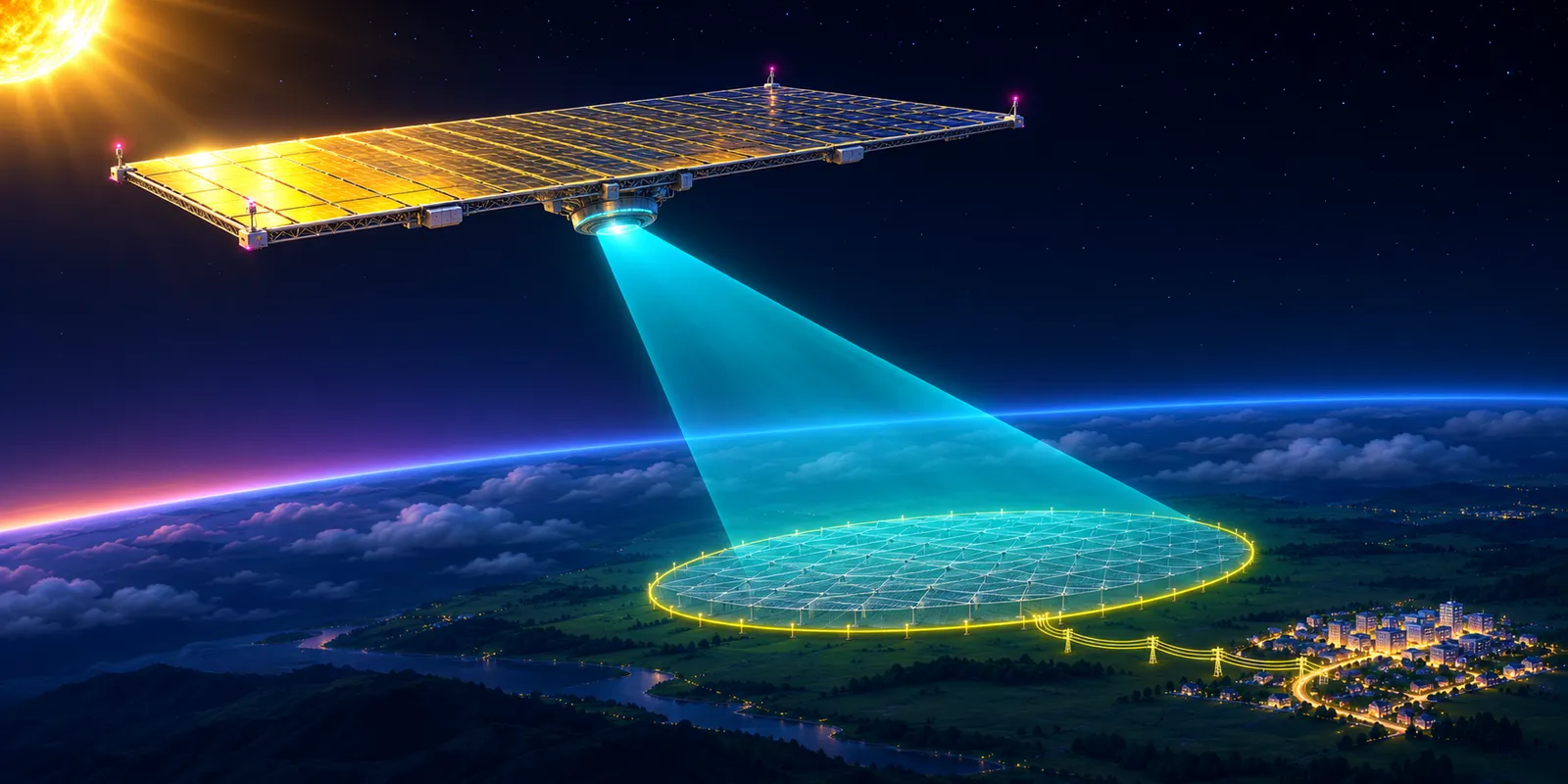 Solar array in sunlight day and nightMicrowave beam the power, sent downRectenna turns it back into electricity
It offers 24/7 clean energy without atmospheric interference. Recent advances in solar cells, wireless power transmission, and reusable rockets are making it more feasible. However, challenges remain in scaling up the technology, reducing costs, and addressing potential risks.
The concept dates back to 1941, when Isaac Asimov wrote about it in a science fiction story. In 1968, Peter Glaser introduced the first engineering design for a solar power satellite system. NASA and the US Department of Energy studied the concept extensively in the late 1970s. Interest resurged in the 1990s, with NASA conducting fresh feasibility studies.
In recent years, several countries including Japan, China, India, the UK and US have pursued research and technology development for space-based solar power. Key milestones include wireless power transmission demonstrations by Japan in 2015 and the US in 2023.
#MARKETWATCHInvesting in the Universe
| FUND | PRICE | CHANGE |
|---|---|---|
| Procure Space ETF (UFO) | $16.32 | ▲ +2.0% |
| RK Space Exploration and Innovation (ARKX) | $15.15 | ▼ -1.1% |
| S&P Kensho Final Frontiers (ROKT) | $44.56 | ▼ -2.0% |
#BEYONDTHEHYPEThoughts and Opinions
The Uncharted Territory of AI and International Space Law
Artificial Intelligence (AI) is already beginning to proliferate throughout the space industry. AI is being used to process data captured in space for the benefit of life on Earth. It is also being used in outer space itself to help with missions on board satellites, rockets, and rovers, enabling a new generation of space exploration capabilities. As AI capabilities spread and develop further, they will increasingly come into contact with the international space law framework and the interaction between AI and space law will become more relevant and need to be properly understood. So how does AI interact with the international space law regime?
The core of international space law (the treaties) was drafted in the 60s and 70s, well before modern AI came into existence. Because of this, AI is not addressed directly in any of the international treaties governing space activities. This doesn't mean they are irrelevant though! They still form a foundational basis for regulating the use of AI in space and will be relevant for a long time to come.
The Outer Space Treaty of 1967 set out the key principles of space law. Some of these principles, including the responsibility of States for national activities in outer space, the liability of States to other State parties for damages caused by their space objects, and the jurisdiction of States over objects sent into space. The Liability Convention then expanded the liability regime, and the Registration Convention detailed the rules regarding how space objects should be registered and what information should be recorded. Beyond treaties, other documents may be relevant, but there are no sources of guidance directly addressing AI or automated systems.
The lack of guidance isn’t outright problematic, but it does raise some questions. For instance, what happens if an AI system is ‘autopiloting’ a satellite in orbit, and it accidentally crashes it into another satellite, destroying them both? Fault would need to be established in order to hold the AI enabled satellite’s operator liable. But given there is already a lack of ‘case law’ in space, with no solid examples of the treaties being applied to real scenarios, what happens when you add the complication of an opaque AI system to the mix? How can you tell exactly what went wrong? Was there actually ‘fault’, or was the AI system’s sensors fooled like a Tesla mistaking the full moon for a yellow traffic light? Where does the fault lie in the chain of interconnected systems that the AI component operates within? Does an AI system falling short of a specified standard of reliability classify as fault? For now, while academics may debate these questions, there are no solid solutions.
Those academics haven’t been resting though. Many different propositions have been advanced to try and address these questions. New treaties and binding protocols to existing treaties could clarify details of the existing framework to make them ‘future ready’. A ‘special registry’ for non-tangible space objects could track complicated software systems being used in space to help with information sharing and potentially liability claims in the event of an accident. However, it is unlikely these suggestions will be adopted anytime soon, and so it’s more likely that the space industry will have to look to AI specific regulations from non-space legal frameworks for guidance.
Indeed, the landmark adoption of the European AI Act demonstrates this commitment, alongside initiatives like the American Executive Order on the Safe, Secure and Trustworthy AI and the UN Resolution on Responsible AI. The international competition to shape the trajectory of AI governance is booming. In future editions, we’ll explore the different AI related initiatives that could inform the use of AI in the space industry!
#TOGETHERWITHTake your space career from if, to when, to how
 SPONSOR TRANSMISSION · COURSERA
Sponsored · COURSERA
Reach your space career goals with Coursera Plus
Archived sponsor message from 30 MAY 2024.
#STARGRAPHThe Top Energy Priorities of Major Countries
Energy Security 31% · Affordability 28% · Cleaner Energy 28% · Reduce Carbon Emissions 18% · Reduce Deforestation 18% · Reduce Reliance on Russian Fuel 16%
#PRODUCTIVITY5 Resources to Boost Your Workflows
- TOOL · 01DataLab → Easily connect your database or upload a file, use AI to determine necessary data, and share insights effortlessly with your team.
- TOOL · 02Nowadays → An AI-powered corporate event planner that simplifies organizing by accommodating your company’s unique preferences and needs.
- TOOL · 03Monday.comPROMOTED → A collaboration platform that allows teams to focus on executing tasks, projects, and processes efficiently and achieve shared goals at scale.
- TOOL · 04Philosophers in Space → Join Captain Callie Wright and Chief Ethics Officer Aaron Rabinowitz as they explore sci-fi’s intriguing hypotheticals and ethical questions in a fun, space-themed journey.
- TOOL · 05Space SafetyPROMOTED → This online course, led by astronaut Dr. Thomas Reiter and ESA experts, addresses satellite collisions, meteorite impacts, and space debris. Topics include space weather, collision avoidance, cybersecurity, and space medicine, exploring future space applications and astronaut safety.
#SPACEREGSDevelopments in space governance, regulations & policy
Military Space Operations
The newly published Woomera Manual details the international legal framework for military space activities, offering a comprehensive reference for military lawyers and policymakers, crucial for maintaining space security and preventing conflicts.
South Korea Space Agency
South Korea has launched the Korea AeroSpace Administration (KASA) to unify its space policy efforts, aiming to advance space exploration, including reusable launch vehicles and a lunar lander by 2032.
UK Launch Sector
The UK is set to begin its first vertical rocket launches in 2024 from SaxaVord Spaceport in Shetland, marking a historic milestone for the UK space industry. This new capability will position the UK at the forefront of spaceflight innovation, supporting both national and international satellite launch operations.
New Zealand Space Roadmap
New Zealand’s first Space Minister unveils an ambitious plan focusing on sustainable space practices, advancing the nation’s space capabilities, and increasing international collaborations. This strategy aims to position New Zealand as a significant player in the global space industry.
Starlink Flaring Risks
New research indicates that SpaceX’s Starlink satellites are causing extreme flaring, which has led to increased reports of unidentified aerial phenomena (UAP) and poses risks to aviation safety. These bright reflections can confuse pilots and disrupt aviation operations.
UNOOSA and Japan Collaboration
UNOOSA and Japan are partnering to support space law missions in Asia and the Pacific, providing legal advisory services and capacity-building for countries like the Philippines and Thailand. This initiative aims to enhance adherence to international space law and promote sustainable space activities.
ESA Zero Debris Debate
Europe faces discord over the ESA’s Zero Debris Charter and its integration with future EU space law. Only 12 of 22 member states endorsed the charter, highlighting the challenge of aligning space debris mitigation efforts across Europe.
US Space Bills
Congress is set to review key space-related bills this week, including the National Defense Authorization Act and NASA’s fiscal 2025 budget. These discussions will shape future space policy, funding, and capabilities, with significant implications for national security and scientific advancement.
AI Simulates Alien Contact
Researchers have developed “CosmoAgent,” an AI program that simulates first contact scenarios with alien civilizations, assessing the potential for peaceful coexistence and the risks involved. This innovative tool uses large language models to explore interstellar communication dynamics and ethical interactions.
UFO Document Declassification
A new bill proposed in Congress would mandate the declassification of all government documents related to unidentified aerial phenomena (UAP). This legislation aims to increase transparency and public access to information on UFOs, potentially uncovering long-held government secrets.
Space Piracy Conference
The first annual Space Piracy Conference is set for February 2025, focusing on addressing and mitigating the threat of space piracy. This event will bring together global experts to discuss legal, security, and technological solutions to protect space assets.
US-India Space Innovation
The strengthened US-India partnership, highlighted by India’s signing of the Artemis Accords and plans for joint lunar and Martian missions, is driving significant advancements in space and other critical sectors. This collaboration is expected to boost innovation and investment, enhancing both nations’ capabilities in the global space industry.
China’s Commercial Space Push
China is accelerating its shift towards a more commercial space industry with increased government support and private investment. This move aims to enhance innovation and competitiveness, making China a significant player in the global space market.
Space Defense Trends
The latest trends in space defense policy emphasize the integration of proliferated LEO constellations and advancements in in-space manufacturing. These developments aim to enhance national security and drive innovation within the space industry.
Space Safety Initiative
Scout Space has been selected by AFWERX to develop a collision analysis framework aimed at enhancing space safety and operational effectiveness. This initiative will help spacecraft autonomously identify, track, and avoid potential collisions with space debris, ensuring the protection of critical space assets.
#INTHELOOPTech Trends on Earth Shaping Our Future in Space
Big Tech Tree Initiative
Google, Meta, Microsoft, and Salesforce form the Symbiosis Coalition to tackle carbon emissions through nature-based projects, aiming for high-quality forestry initiatives to offset their greenhouse gas footprints.
Hybrid Innovation
Chinese automaker BYD claims its new hybrid can cover over 1,250 miles without recharging or refueling, significantly outpacing competitors.
AI Apathy
Survey reveals widespread disinterest in AI, with many unaware of tools like ChatGPT, highlighting a gap between tech hype and public engagement.
Solar Surplus
Germany's solar power surge leads to negative electricity prices, highlighting both the benefits and challenges of renewable energy management.
Carbon Cutting
Innovative method reduces cargo ship emissions by 17%, leveraging slower speeds to cut fuel use without vessel modifications.
Heat Recovery
Google expands its Finnish data center for AI, reusing server heat to warm local buildings, mitigating environmental impact and supporting sustainability goals.
#GHOSTINTHEMACHINEEmpire of Stars, René Magritte-inspired art
 01
EOFUntil Next Time
#MISSIONDEBRIEFGetting Better Together
I value your opinion, so if you have specific advice or anything interesting you’d like to share, please let me know on LinkedIn.
Thank you for reading and see you at the next orbit!
P.S. New here? Get the next issue in your inbox: [ subscribe --free ]